Last updated November 25, 2026







Free written scope consultation - allowances, timeline, and change-order rules on paper before a single trade is scheduled
Home Remodeling Maintenance Checklist for Bellevue Homeowners
The claim that does the most damage in Bellevue homes rarely arrives with wind and noise. It starts as a thin bead of caulk along a window trim, a hairline gap at a door sill, or a spot where the paint has pulled away from cedar siding. Three wet winters later, that small failure has moved water into framing, and the repair is no longer a tube of sealant. Bellevue’s climate doesn’t punish homes with dramatic events so much as with patience: months of low-grade moisture, freeze-thaw cycles that work on east-facing surfaces, and a tree canopy that keeps walls shaded and slow to dry. This checklist is organized around what actually fails here. You’ll learn how to inspect your home on a Bellevue schedule, which materials need which attention, and when upkeep becomes a remodel trigger.
Quick Answer
A home remodeling maintenance checklist in Bellevue should focus on moisture management first: sealant joints, flashing, window and door perimeters, siding paint integrity, and deck fasteners, checked twice a year before and after the wet season. Beyond water, the list covers gutters and drainage, roof penetrations, caulk and paint on your specific siding material, and hardware lubrication on your windows. Items that show rot, soft wood, or repeated water staining are remodel triggers, not maintenance tasks.
Styles & brands we work with
- Kitchen remodeling
- Bathroom remodeling
- Home additions & ADU
- Roofing
- Windows & doors
- Driveway & pavers
- Fence
Table of Contents
- Why Bellevue Homes Need a Different Checklist
- The Bellevue Maintenance Calendar: Wet Season and Dry Season
- Post-Remodel Inspections in Bellevue’s Wet Shoulder Seasons
- Siding by Material: Cedar, Fiber Cement, and Engineered Wood
- Windows, Doors, and Hardware Schedules
- Decks and Outdoor Structures: Composite and Wood Timelines
- Moisture Monitoring and the Tree Canopy Factor
- When Maintenance Becomes a Remodel Trigger
Why Bellevue Homes Need a Different Checklist
Bellevue doesn’t get the moisture volume of the Olympic Peninsula or the deep freezes of the Cascades, but it sits in a climate that is unusually hard on exterior assemblies for a simple reason: long wet shoulder seasons with limited drying. Rain arrives in October and lingers into spring, and the months that would normally dry a wall out are often damp themselves. Wood stays above the moisture content where rot fungi can establish. Paint stays soft longer. Caulk loses adhesion from repeated wet-dry cycling rather than from one big failure.
Freeze-thaw is the second factor. Bellevue gets enough sub-freezing nights each winter that water trapped in a crack or behind a trim board expands and contracts repeatedly. East-facing and north-facing surfaces, which see the least sun, take the most cycles. Concrete steps, brick borders, and painted trim on those sides show it first.
The third factor is the tree canopy. Large firs, cedars, and maples shade millions of Bellevue walls and roofs for much of the day. That’s beautiful and it’s also why siding on the shaded side of a house can stay wet for days after a rain. Shade slows evaporation, holds humidity against the wall, and drops organic debris onto roofs and into gutters.
The result is a maintenance profile where water management matters more than almost anything else. A homeowner who keeps caulk, flashing, gutters, and paint in good order prevents the majority of expensive repairs. In our experience, the well-maintained Bellevue home isn’t the one with the longest to-do list. It’s the one where somebody walked the perimeter twice a year and looked closely.
The Bellevue Maintenance Calendar: Wet Season and Dry Season
Bellevue has two useful maintenance windows: the dry stretch from roughly late spring through early fall, and the wet shoulder seasons. Your heaviest work belongs in the dry window, when sealants cure properly and paint can actually dry. The wet window is for inspection and quick fixes. Here’s how we’d sequence the year for a typical Bellevue home.
Dry Season (Late Spring Through Early Fall)
- Walk the perimeter and grade. Check that soil slopes away from the foundation on every side. Fill low spots where water pools.
- Inspect and refresh sealant joints. Cut out failed caulk at window and door perimeters, at trim-to-siding joints, and at penetrations. Reapply only when the surface is clean and dry.
- Clean gutters and downspouts. Clear debris from the tree canopy, then test that downspouts discharge well away from the foundation.
- Wash and inspect siding. A gentle wash reveals cracks, lifting paint, and soft spots that dirt hides.
- Touch up paint before the wet season. Any exposed bare wood gets primer and topcoat now, not in November.
- Service windows and doors. Clean tracks, check weatherstripping, and lubricate hardware per manufacturer guidance.
- Inspect the roof from the ground and with binoculars. Look for lifted flashing, cracked sealant at penetrations, and moss growth on shaded slopes.
- Check decks and railings. Look for popped fasteners, soft boards, and gaps at the house attachment.
Wet Season (October Through March)
- After the first big storms, walk the interior at every window and door and look for staining, bubbling paint, or damp drywall.
- Check the attic and crawlspace for new moisture, condensation, or daylight at penetrations.
- Clear gutters again after leaf drop.
- Look for ice damming at eaves during cold snaps, and check that downspouts aren’t frozen.
- Note anything that needs repair in the dry window, and photograph it.
That sequence sounds modest, and it is. Bellevue homes that stay in good condition usually aren’t getting heroic maintenance. They’re getting timely maintenance on water-related items.
Post-Remodel Inspections in Bellevue’s Wet Shoulder Seasons
New flashing and new window seals haven’t proven anything until they’ve been through a Bellevue wet season. The two shoulder windows, October into November and February into March, are when fresh work faces its first real stress test. A remodel finished in July looks perfect in August. What matters is what happens in December.
We recommend a deliberate post-remodel inspection at three points: within the first month of completion, after the first major fall storm, and once in late winter. Each one focuses on the same short list.
- Window and door perimeters. Check the interior side of every new or replaced window for staining at the drywall joint. Water that gets behind a poorly seated flashing often shows inside first.
- Flashing and drip edges. Look at the exterior transition where new siding meets a roof, a deck ledger, or a chimney. Sealant should be continuous, and metal flashing should be visible and undamaged.
- Roof penetrations. Vents, skylights, and any new chimney work get a close look after the first heavy rain. A small leak at a boot or collar is cheap to fix now.
- Siding transitions. Check the joints between new and existing siding, and around any new exterior fixtures or outlets.
- Deck and porch attachments. Re-check fasteners at the ledger board and at rail posts after a wet season has had a chance to move the wood.
If you had a home remodeling project that included new windows, doors, or exterior work, this inspection schedule matters more than the punch list did. Punch lists catch cosmetic issues. Moisture inspections catch the ones that cost real money.
If you notice water intrusion at any point in this sequence, stop and document it: photographs, dates, and where the water is showing. That record is valuable if a repair is needed, and it also informs the next phase of maintenance. We can walk a completed project with you and check the work against what we’d expect for Bellevue conditions.
Siding by Material: Cedar, Fiber Cement, and Engineered Wood
Bellevue has a lot of cedar siding on its older homes, and it has more and more fiber cement and engineered wood on newer ones and remodels. Each material has a different failure profile in this climate, which means each gets a different checklist.
Cedar Siding
Cedar is a beautiful and forgiving material, but it weathers quickly in Bellevue’s wet, shaded conditions. It takes up moisture, goes gray, and can develop rot at end grains and joints if water sits there. Cedar on the shaded side of a house can stay damp for days at a time.
- Inspect every fall for soft spots, especially within 12 inches of the ground and under windows.
- Check end grains at corners and around windows; that’s where water enters first.
- Expect more frequent paint cycles than on fiber cement. Any bare wood exposed going into October should be primed and topcoated.
- Watch for mildew on shaded walls. It’s common in Bellevue’s tree-canopy microclimates and doesn’t always mean the siding is failing, but persistent mildew can mean water is sitting.
Fiber Cement Siding
Fiber cement is more stable than cedar, but it isn’t maintenance-free. The joints, penetrations, and cut edges are where problems start, because the material depends on proper sealing and flashing to keep water out of the wall assembly.
- Check caulk at butt joints, corners, and penetrations every dry season.
- Inspect paint for chalking and peeling; fiber cement holds paint well, but Bellevue’s wet seasons still stress exteriors. Recoat on the manufacturer’s recommended schedule for your specific product.
- If you have James Hardie products on your home, understand that the warranty depends on product-specific installation. If you’re touching up or repairing, use the products and methods the manufacturer specifies.
- Look at the bottom edge of the siding above grade. Fiber cement needs clearance from soil, and Mulching too close is a common cause of wicking.
Engineered Wood Siding
Engineered wood products have a predictable moisture-uptake pattern when their coating fails. Once water reaches the substrate, it can swell, and swelling is not reversible. That makes paint and caulk maintenance more urgent than it is on fiber cement.
- Inspect for paint failure at end grains, joints, and the bottom edge of each course.
- Any crack or bare spot gets primer and topcoat in the dry window, without delay.
- Check the transitions between engineered wood and trim, where caulk tends to fail first.
Siding is one of the reasons we stock our recommendations around named brands. We work with James Hardie exterior products and understand what their installation requirements actually ask for. When you’re selecting or repairing siding, that product-level knowledge is the difference between a repair that lasts and one that fails at the next wet season.
Windows, Doors, and Hardware Schedules
Windows and doors are the most common entry point for water in a Bellevue home, and they’re also the most neglected maintenance item. The good news is the schedule is simple. Twice a year, you check the perimeter and the hardware. Once a year, you service the moving parts.
Twice-Yearly Inspection
- Look at the interior trim and drywall at every window and door for staining, bubbling, or soft spots.
- Check the exterior caulk joint at window and door perimeters. It should be continuous and adhered, with no gaps or lifting.
- Check weatherstripping at doors for compression and gaps; a dollar bill should not slide easily past a closed door at the frame.
- Look at the sill and threshold for water pooling after storms.
Annual Hardware and Operating Service
Window and door hardware is a mechanical system, and it needs service. Most manufacturers publish a schedule for this, and Bellevue’s wet climate makes it more important, not less. Lubricate hinges, locks, and sliding-door tracks with products the manufacturer recommends. Clean debris from tracks. Check that sliding doors operate smoothly and that the rollers aren’t worn. Check that casement windows open and close fully, and that the crank mechanism isn’t stiff.
If you have Marvin windows, the manufacturer publishes hardware lubrication guidance for their systems. Follow it. A clogged track or a dry lock mechanism is easy to fix and expensive to ignore. The same principle applies to other premium window brands: service them on their schedule, not when they fail.
Doors and Finish Hardware
Entry doors take a beating in this climate, and the transition from exterior to interior is where water and air get in. Check the threshold, the weatherstripping, and the sill at least twice a year. Look for daylight, drafts, and staining at the interior floor transition.
If your remodel involves replacing windows or doors, the brands you choose matter. We work with window systems built for the Pacific Northwest and can help you compare options. Our bathroom remodeling projects often include new windows, and we take the same care with the exterior details that we take with the interior finishes.
Decks and Outdoor Structures: Composite and Wood Timelines
Bellevue decks are typically under trees, which means they see a lot of moisture and not a lot of sun. That combination changes maintenance timelines. Composite decks like Trex and Fiberon need less upkeep than wood, but they still need attention at fasteners, attachments, and anywhere water pools. Pressure-treated wood needs more.
Annual Inspection (Every Deck)
- Walk the surface and feel for movement underfoot. A soft or springy spot is a signal to look closer.
- Inspect fasteners and connectors at the joists and at the ledger board. Stainless or coated fasteners are what to look for; corrosion is a reason to replace them.
- Check the ledger attachment to the house, the point where most deck failures begin.
- Look at the railing connections and post bases.
- Check for standing water or debris between deck boards and at the house wall.
Trex and Fiberon Decks
Composite decking doesn’t rot and doesn’t need staining. It does need cleaning at least once a year, and it needs its fasteners checked. Be careful with pressure washing; the manufacturer’s guidance on pressure and cleaning products matters for the surface and the warranty. Check the manufacturer’s published care instructions for your specific product line.
Pressure-Treated Wood Decks
Pressure-treated wood is a maintenance commitment in Bellevue. Check it twice a year for soft spots, splitting, and fastener corrosion, and plan to reseal or restain on the schedule the product and finish require. The shaded, wet environment under your trees is hard on wood.
If your deck is part of a larger exterior project, we can talk through how deck and siding maintenance tie together. For Bellevue homes considering bigger changes, our guide to Bellevue Remodeling Pros lays out the full scope of what we do.
Moisture Monitoring and the Tree Canopy Factor
In Bellevue, the single most useful maintenance habit is a moisture walk. Twice a year, you walk the perimeter of your home and look at water. Not just at storms, but in the days after. Bellevue’s tree canopy creates microclimates where some walls stay wet much longer than others, and those walls are where maintenance belongs.
What to look for:
- Darker patches on siding or paint. These often show where water is lingering, and they deserve a close look at the joints above them.
- Soft wood. Probe gently at the bottom edges of trim and siding with a screwdriver. If it gives easily, moisture is already working.
- Mildew or moss on shaded walls and roofs. Common in Bellevue, but a signal to check drainage and airflow around the affected area.
- Water stains at interior trim and ceilings. These are the most important. A stain means water is already through the exterior.
- Damp crawlspaces and attics. Check for condensation, musty odor, or visible moisture on framing.
The tree canopy matters here in a specific way. Mature trees shade walls, keep them cool, and shelter them from the sun and wind that would dry them. That’s why a shaded wall in Bellevue’s climate needs more careful maintenance than a sun-exposed one: it stays wet longer, and the margin for deferred repair is smaller. Trimming vegetation back from walls, keeping gutters clear, and maintaining airflow helps.
Where we can, we also choose materials that hold up in this climate. Schluter systems, for example, protect tile edges and waterproof the substrate underneath – which matters in Bellevue bathrooms and shower surrounds, where moisture sitting behind tile is one of the quiet failures we see most often.
When Maintenance Becomes a Remodel Trigger
There’s a point where a maintenance task stops being maintenance. Knowing where that line is saves Bellevue homeowners from pouring money into repairs that keep coming back. These are the signals we’d treat as a remodel trigger, not an ongoing repair item:
- Recurring water intrusion at the same location. If the same window or the same wall keeps leaking after a repair, the underlying assembly is the problem, and the fix is bigger than caulk.
- Soft or rotted wood at multiple locations. Rot that’s spread across a wall, a bay, or a deck suggests the assembly has been wet for a while.
- Multiple failed components in one area. A window with a failed seal, a soft sill, and a rotting trim board is one assembly that needs replacing, not three repairs.
- A kitchen or bath where the plumbing, substrate, or tile is failing together. When water damage reaches the substrate, the assembly is where the problem lives.
- An outdated layout with a functional problem. If the maintenance items keep recurring because the space itself doesn’t work, a remodel solves both.
If you’re at that point, document it. Photograph the conditions, note the dates of water intrusion, and keep any contractor repair recommendations in writing. When you apply for a permit for a larger scope of work, a record of conditions helps your contractor build an accurate scope, and it helps the city review the application. Bellevue permitting for structural or exterior work generally benefits from clear documentation of what already exists and what needs to change.
If the project is a kitchen, our kitchen remodeling work covers everything from layout changes to cabinetry and countertops. If it’s a bathroom, the same approach applies. Either way, we help you build a scope that addresses the underlying conditions, not just the visible damage.
Common Mistakes to Avoid
- Caulking over failed caulk in the wet season. New sealant won’t adhere to a wet or dirty joint, and it fails quickly. Cut out the old bead and reapply in dry conditions.
- Waiting for visible damage before inspecting. By the time water shows on interior drywall in Bellevue, it’s usually been traveling for a while. The best inspection catches damp before visible.
- Ignoring shaded walls because they look dry. In Bellevue’s tree-canopy microclimates, the shaded wall is often the wettest one. Check it on the same schedule as the sunlit walls, or more often.
- Assuming composite decking needs no maintenance. Composite decks need cleaning and fastener checks. A loose ledger is a real problem regardless of the decking brand.
- Skipping paint touch-ups on fiber cement and engineered wood. Paint is the first line of defense. A small bare spot in October is a much bigger problem in March.
- Not documenting maintenance and repairs. A photo timeline of conditions is useful when you need to show a contractor or a permit reviewer what’s changed, and it’s useful to you when you plan the next phase of work.
- Confusing a maintenance backlog with a remodel. Some issues are genuine triggers, and some are just deferred upkeep. Getting a professional set of eyes on the difference saves money in both directions.
See the difference
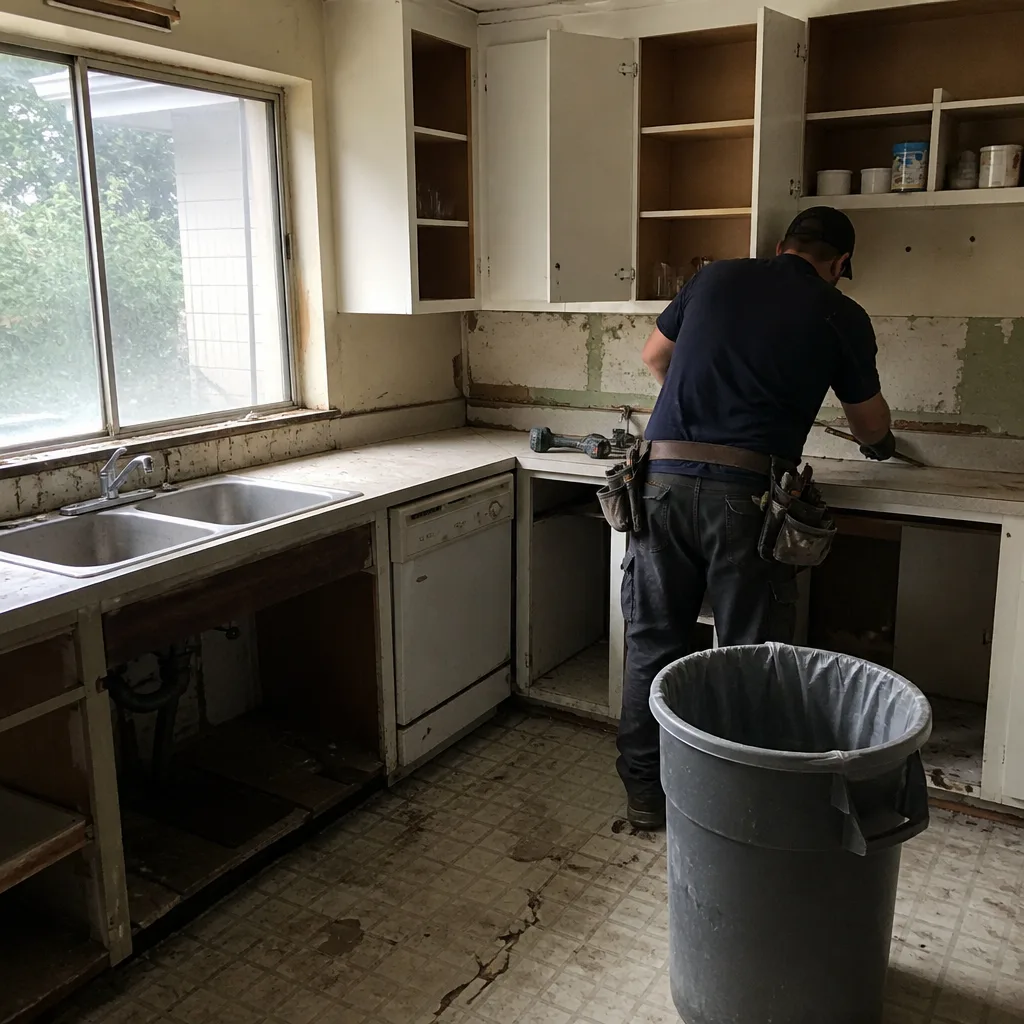 Before
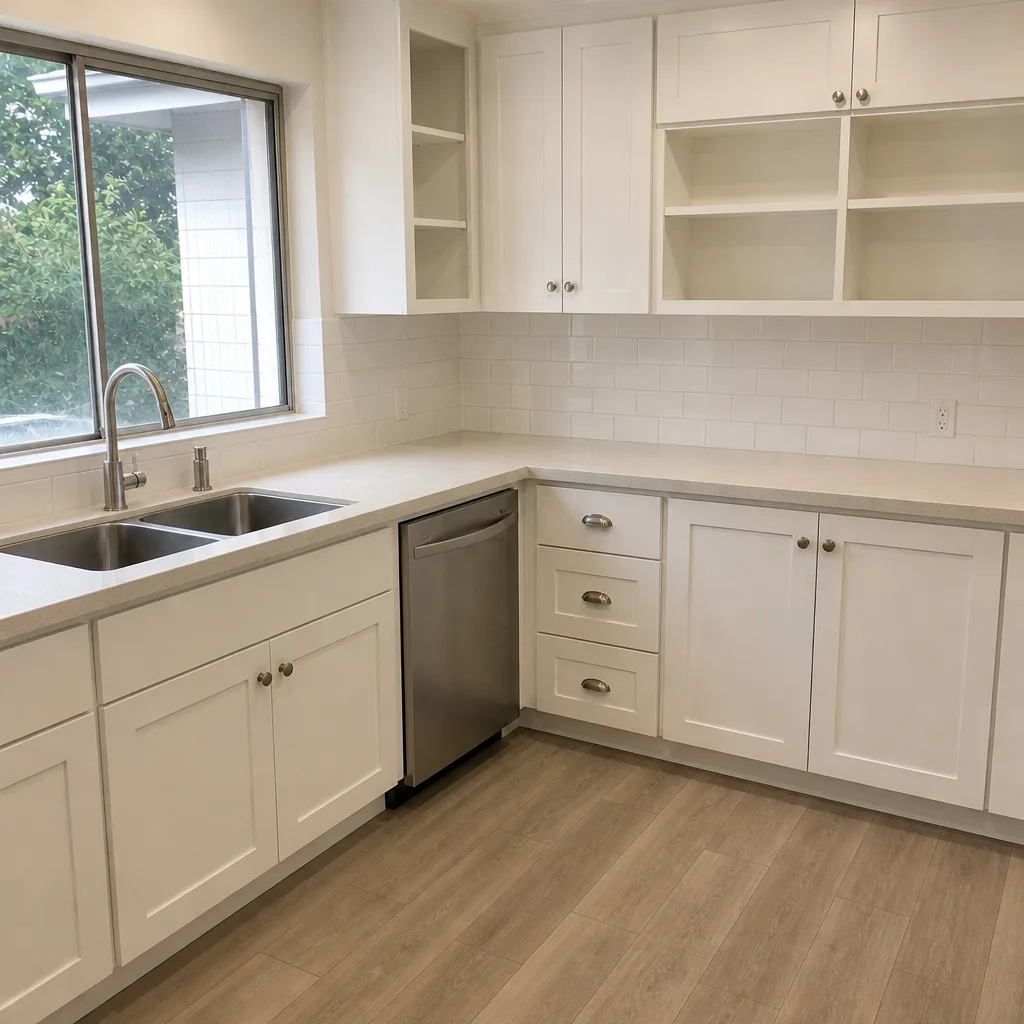 After
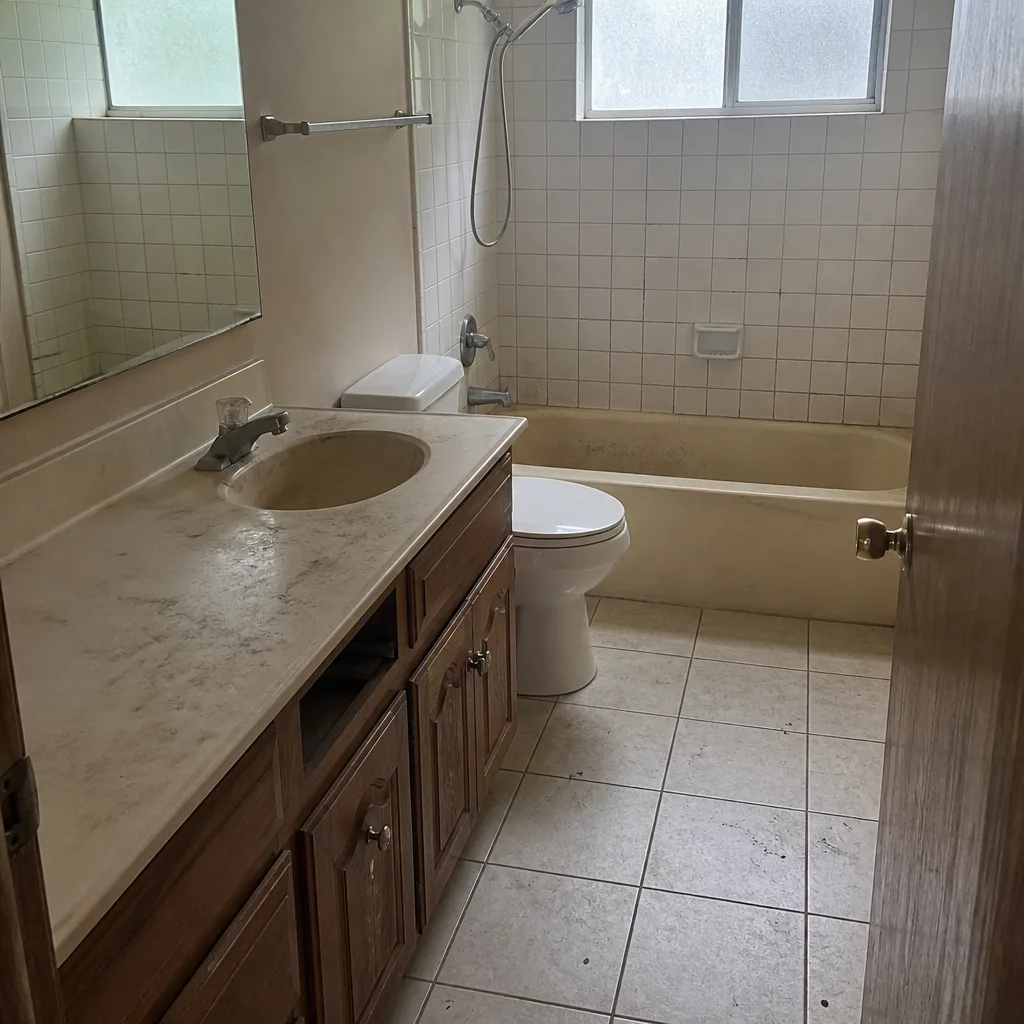 Before
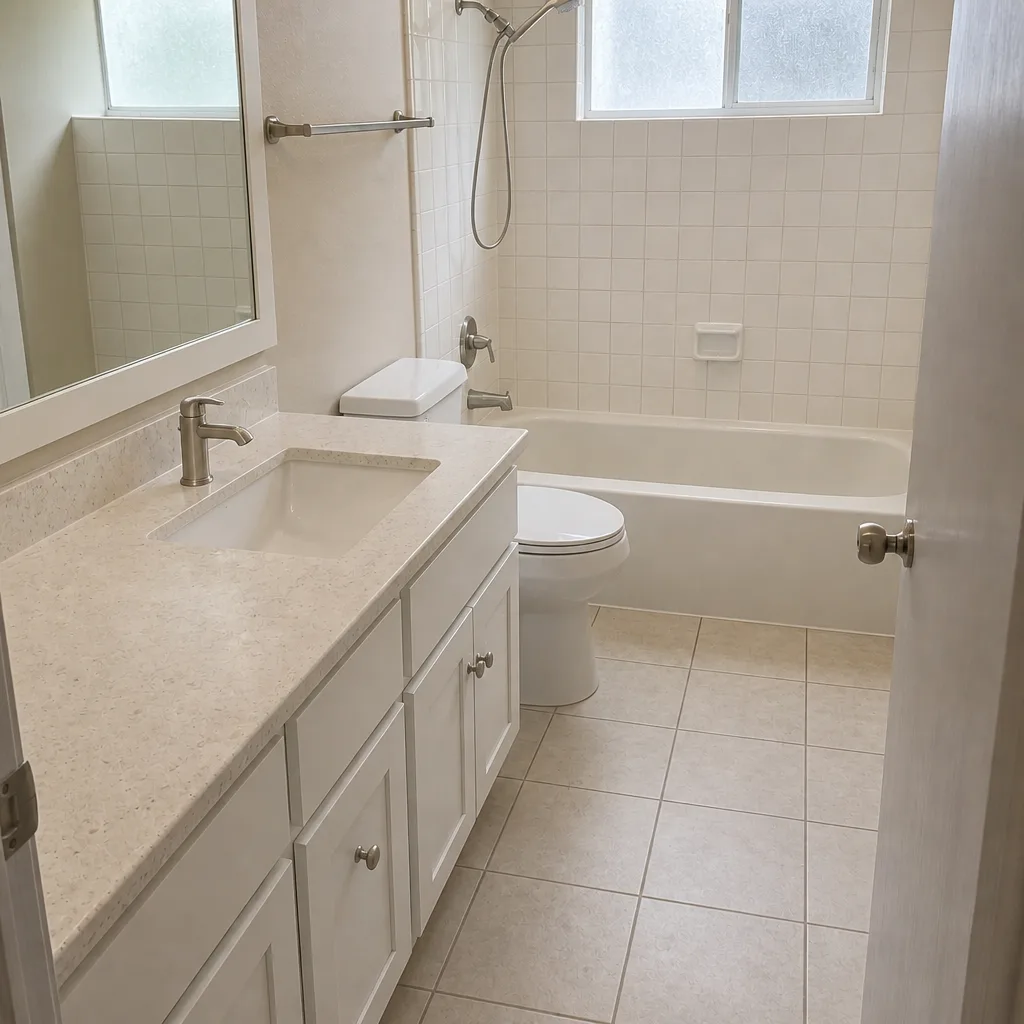 After
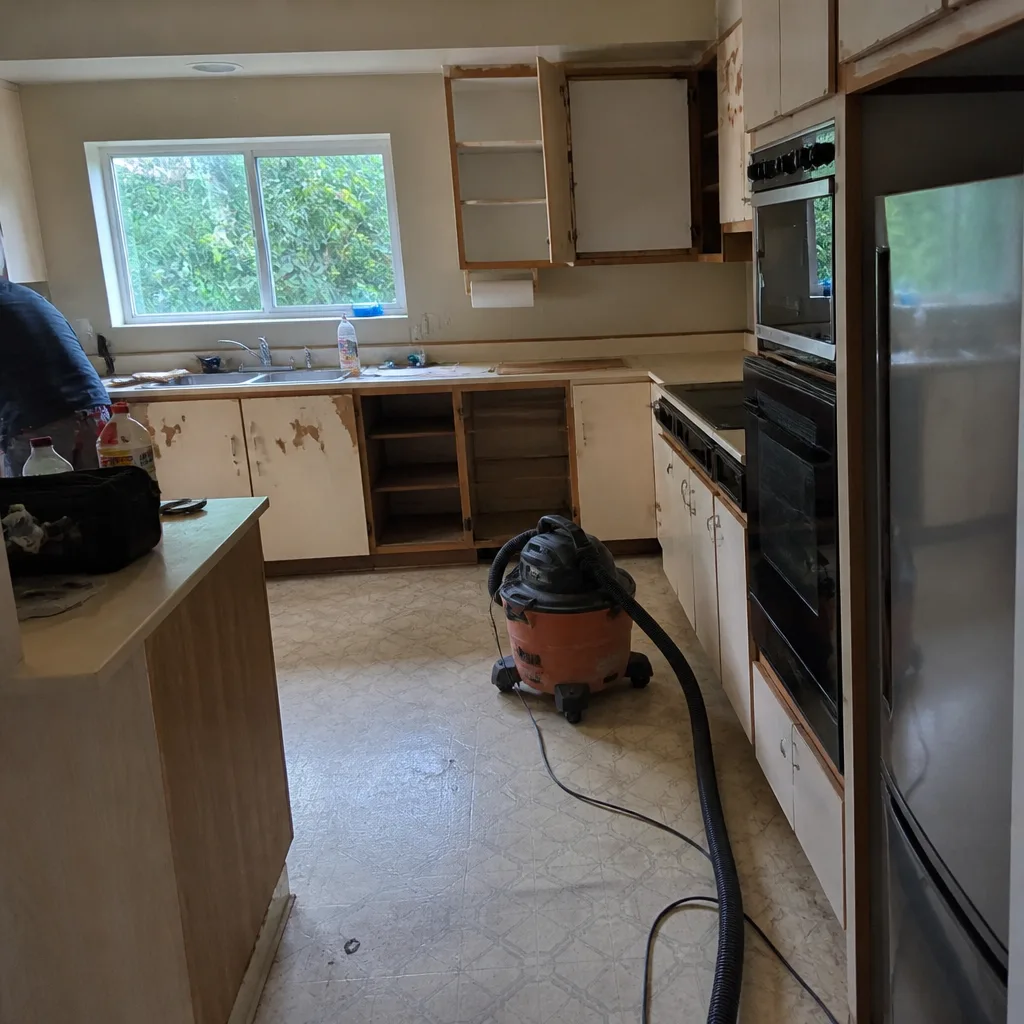 Before
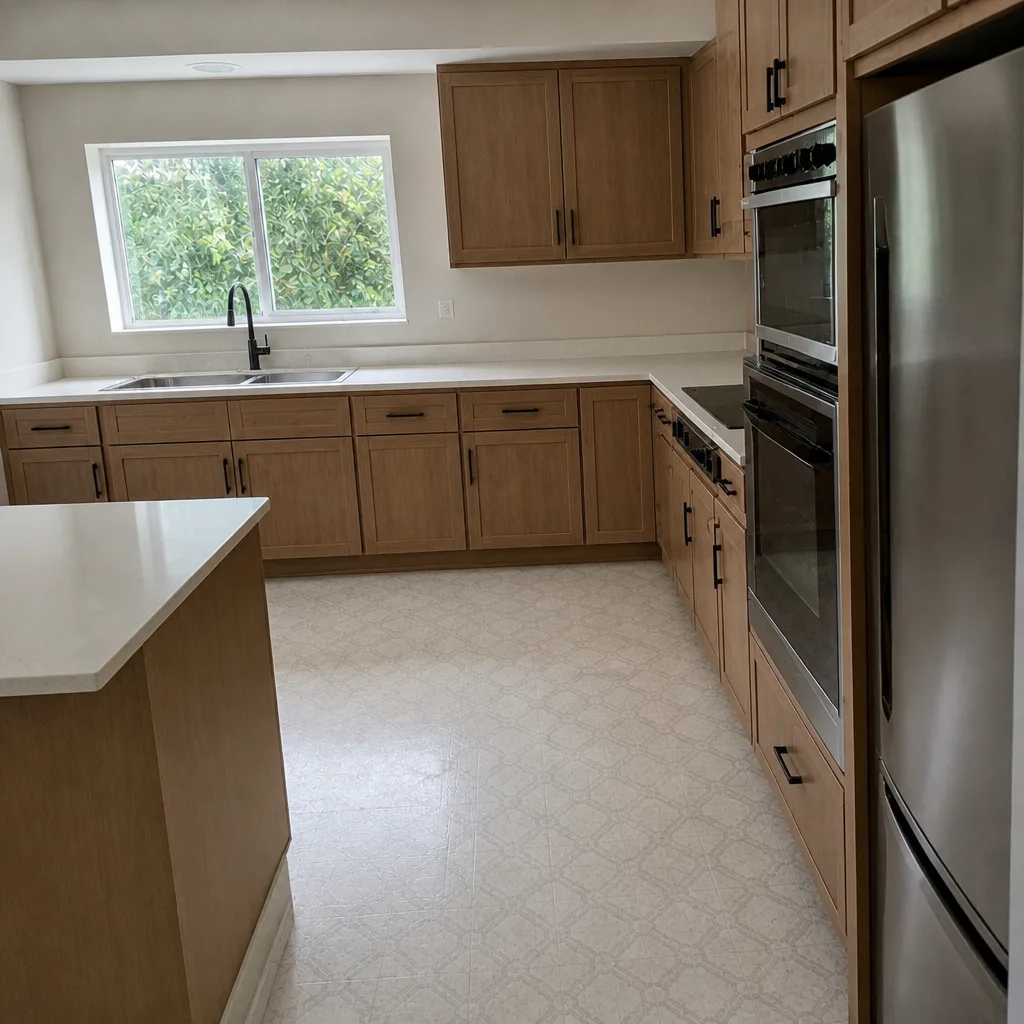 After
When to Call a Professional
Call a professional when moisture or rot is recurring, when multiple components of one assembly are failing together, or when a maintenance repair keeps coming back. Call too when you’re ready to talk about a larger scope of work. Our technicians have up to 14 years of experience with Bellevue homes, and we know what these conditions look like. We offer free estimates in Bellevue – call (425) 675-0145. We answer 24/7. Fast dispatch from 7am to 7pm, Sunday through Friday. A written, line-item estimate is free, the price is set per job by that estimate, and there are no change orders on planned residential work.
Frequently Asked Questions

Twice a year at minimum: once in the dry season before the wet months arrive, and once after the wet season has had a chance to test everything. In our experience, homes with significant tree canopy coverage on shaded walls benefit from a closer look at the interior transitions after the first heavy fall storms. The perimeter walk takes an hour if you know what you’re looking for.
Sealant and flashing integrity at windows, doors, and penetrations. Water entry at these points is the most common cause of expensive repair we see. Paint and caulk come second, and gutter clearance is third. All three are cheap to maintain and expensive to defer. If you’re unsure about the condition of your window and door seals, call (425) 675-0145 for a free estimate.
Yes, though less than pressure-treated wood. Composite decks need annual cleaning and periodic fastener and ledger checks. The manufacturer’s care instructions for your specific product line govern cleaning products and pressure-washing. A loose ledger or corroded fastener is a real problem regardless of decking brand, and it’s the item we’d check first.
If a repair keeps coming back, or if rot or water damage has spread to multiple components in one assembly, it’s a remodel trigger. A window with a failed seal, a soft sill, and rotting trim is one assembly, not three repairs. Document the conditions and get a professional assessment; that assessment and your photos will help with the permit scope if you decide to remodel.
It depends on how localized the damage is. Small areas of rot at trim and end grains are often repairable. Widespread soft spots, persistent mildew in shaded areas, and rot that has spread behind the siding are repair-versus-replace territory. If you’re weighing a siding replacement, we work with James Hardie exterior products and can walk you through what a proper installation asks for. Call (425) 675-0145 for a free estimate.
We work with a wide range of brands so you can choose what fits your home and your use. For countertops, that includes Cambria, Silestone, and Caesarstone quartz and stone. For cabinetry, we work with KraftMaid and Wellborn. For fixtures, our coverage spans Kohler, Toto, Grohe, Moen, Delta, American Standard, and Blanco. We help you compare and select based on how you live, then handle sourcing and installation. Call (425) 675-0145 to talk through your project.
The Bottom Line
Bellevue’s conditions don’t hand you big dramatic failures. They hand you wet shoulder seasons, freeze-thaw on shaded surfaces, and a tree canopy that keeps walls damp and slow to dry. The checklist that actually works here is built around water: sealant joints, flashing, window and door perimeters, siding paint integrity, and deck fasteners. Inspect twice a year, do heavy repairs in the dry window, and watch the shaded walls closest. When a repair keeps coming back or rot has spread, that’s your remodel trigger. Document what you find, get a professional assessment, and build a scope that solves the condition, not just the symptom.
Call (425) 675-0145 for a free estimate. We answer 24/7. Fast dispatch from 7am to 7pm, Sunday through Friday. Every written estimate is line-item, the price is set per job, and we help you match materials from Cambria, Silestone, Caesarstone, KraftMaid, Wellborn, and Kohler through to the fixtures that finish the room.
Written by the team at Bellevue Remodeling Pros.