Last updated November 25, 2026
Free written scope consultation - allowances, timeline, and change-order rules on paper before a single trade is scheduled
The Complete Home Remodeling Guide for Bellevue Homeowners
Most Bellevue homeowners start planning a remodel by browsing Instagram. The mood board comes first, the contractor conversation comes months later, and the budget gets built backward from a photo of a kitchen that was shot in a different climate entirely. That sequence is the one that gets people into trouble. Bellevue’s permit office, its soil and drainage behavior, and roughly 38 inches of annual rainfall will override every saved image if you haven’t planned for them first. This guide covers the decisions that actually shape a Bellevue remodel: how the city’s permit process moves compared with Kirkland or Redmond, why moisture exposure should set your material list before aesthetics do, how to sequence a multi-room project, and how to budget a real contingency. Read it before you call anyone.
Quick Answer
A successful home remodel in Bellevue starts with three planning decisions made before any design work: confirming your permit path through City of Bellevue Development Services, choosing materials rated for Pacific Northwest moisture rather than for looks alone, and building a contingency budget that reflects local labor rates and current material lead times. Get those three right and the rest of the project, from framing to final paint, has a foundation that holds. Skip them and even a well-built remodel can stall on a permit revision or a substrate failure.
Styles & brands we work with
- Kitchen remodeling
- Bathroom remodeling
- Home additions & ADU
- Roofing
- Windows & doors
- Driveway & pavers
- Fence
Table of Contents
- How Bellevue’s Permit Process Affects Your Timeline
- Why Pacific Northwest Moisture Should Drive Material Selection
- How to Sequence a Multi-Room Remodel
- The Supplier-Access Question Nobody Asks
- Matching Brands to the Job, Not the Other Way Around
- Building a Realistic Bellevue Contingency Budget
- Room-by-Room Priorities
- How to Choose a Remodeling Contractor in Bellevue
How Bellevue’s Permit Process Affects Your Timeline
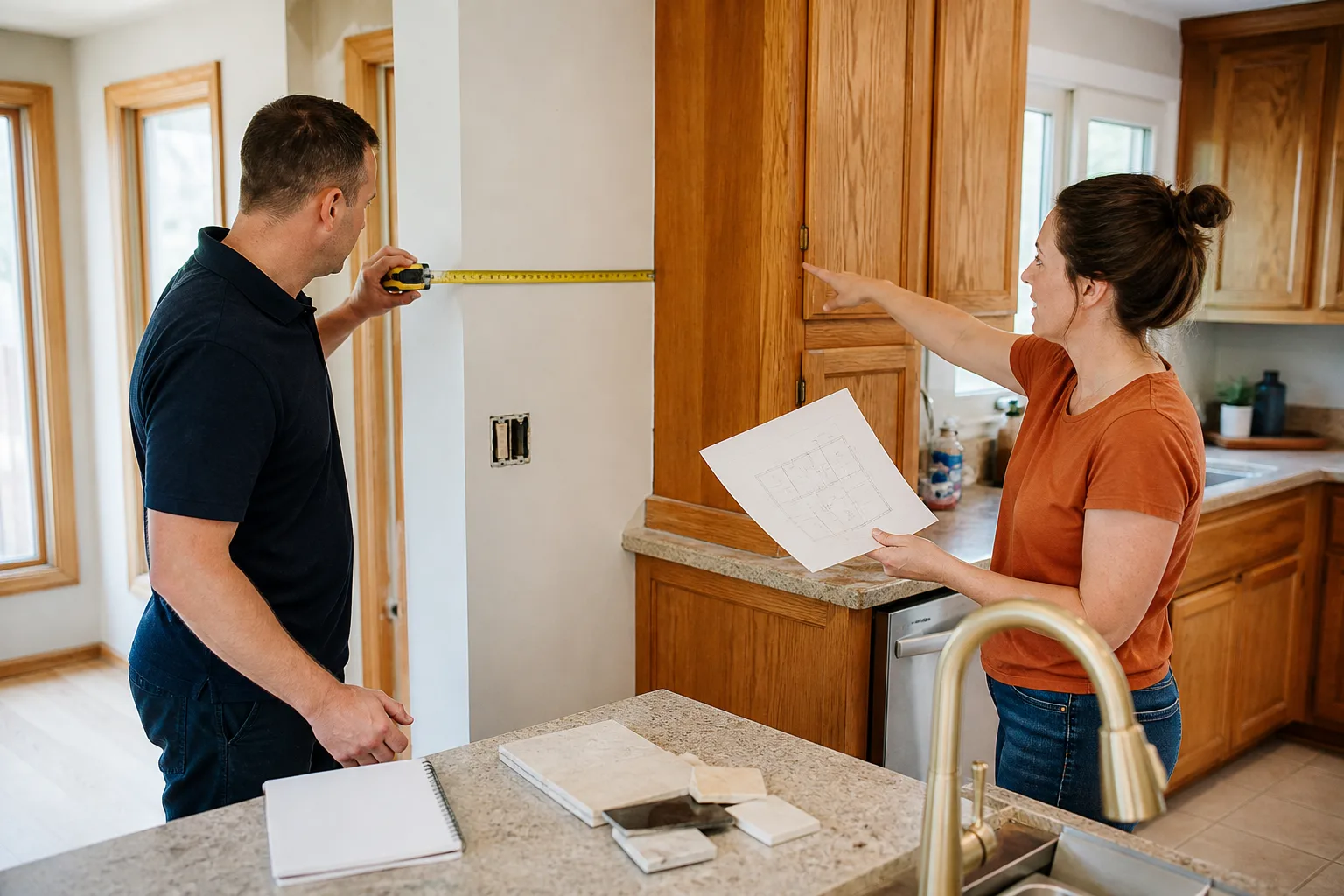
Bellevue runs its own permitting through City of Bellevue Development Services, and that matters because it does not move at the same pace or follow the same submittal expectations as Kirkland or Redmond next door. A homeowner who assumed the process would feel identical across the Eastside often plans a start date that slips. The practical takeaway: treat permitting as a phase of your project with its own duration, not as paperwork that happens while demolition is underway.
Which projects need a permit? The general categories below are where most remodels land, but confirm the specifics with Development Services before you commit to a schedule, since requirements change and depend on scope.
- Structural changes: removing or adding walls, altering load paths, new beams, and anything touching the foundation.
- Mechanical, electrical, and plumbing: moving or adding circuits, relocating plumbing fixtures, new gas lines, and HVAC changes.
- Additions and footprint changes: bump-outs, second stories, dormers, and new square footage of any kind.
- Egress and safety: window changes in sleeping rooms and any work that affects required escape paths.
- Exterior envelope: re-siding and window replacement, which may trigger requirements depending on scope.
Here’s the sequencing point most people miss. In Bellevue, the permit path shapes what can be demoed and when. If you plan to open a wall to check for water damage, then redesign based on what you find, you may be submitting a revision after demolition has already started. That revision has a review clock attached to it. Building a permit buffer into the schedule, and getting inspections sequenced with your trades, keeps the project from stalling mid-demolition. It also keeps your contractor’s crews from showing up to a job site that isn’t ready for them.
The good news is that Bellevue is a well-run permitting jurisdiction with clear review standards. Projects that go smoothly tend to share one trait: the drawings are complete and specific when they’re submitted, not vague placeholders that get bounced back for clarification. If your remodel involves structural work or a footprint change, that completeness is worth real time on the calendar. For projects that stay within the existing envelope, the path is usually simpler, but “usually” isn’t “always” – ask.
Why Pacific Northwest Moisture Should Drive Material Selection
Bellevue gets around 38 inches of rain a year, and that number is the single most useful design constraint a homeowner here has. Moisture doesn’t just come from above. It comes from wet winters, long shoulder seasons where things never fully dry out, and soil that holds water longer than homeowners expect. Materials that perform beautifully in a dry climate can fail here if the assemblies around them aren’t built for ongoing humidity and wet-dry cycling. Choose for the climate first, then for the look.
Where this shows up in real product categories:
- Flooring: Solid hardwood installed over concrete or in a moisture-prone area is a gamble. Engineered wood and luxury vinyl handle humidity swings better, and tile with a properly waterproofed substrate is the safest choice in wet zones.
- Bathroom substrates: The waterproofing layer behind tile matters more than the tile itself. A cement board backer with a bonded waterproofing membrane keeps water out of the framing. Skipping it is the detail most remodelers cut, and it’s the one that leads to rot years later.
- Cabinetry: In a bathroom or a kitchen with a wet zone, cabinet boxes with moisture-resistant construction and properly sealed edges outlast standard boxes.
- Exterior siding and trim: Fiber cement and engineered products designed for wet climates perform better than wood that needs constant repainting. Installing them per manufacturer spec matters for warranty integrity, and not every installer knows those specs.
- Windows and doors: Flashing and installation detailing at openings decide whether a good window stays a good window. The product matters less than the install.
Tile edges are a small example of a bigger principle. Schluter systems protect tile edges and waterproof the substrate, and they’re the detail most remodelers skip because the finished surface hides the work. But that hidden work is what keeps a Bellevue shower from growing mold behind the wall. Ask your contractor what waterproofing system they’re using and whether they follow the manufacturer’s installation method. If the answer is vague, that’s your answer about the contractor.
One more moisture point that homeowners rarely think about: ventilation. A bathroom fan that’s undersized for the room, or a kitchen hood that doesn’t vent outside, traps humidity in the house and undoes good material choices over time. Build mechanical ventilation into the scope from the beginning rather than treating it as an add-on.
How to Sequence a Multi-Room Remodel
The most common way a multi-room remodel goes sideways is that finishes get installed before the structural and mechanical work is truly finished. It looks like a cosmetic problem at first: a baseboard that’s slightly off, or a tile that’s cracked near a doorway. What it actually represents is a job where the sequence got inverted under schedule pressure. The order below is the one that holds up.
- Design and permit phase. Finalize drawings, submit for permit, and lock in your material selections while the review clock is running. This is dead time for construction and productive time for choosing.
- Demolition and rough framing. Open up the project, confirm or revise structural decisions, and complete frame changes. Any surprises (a hidden structural issue, an old water stain that turns out to be active) get addressed now, not after drywall.
- Rough mechanical, electrical, and plumbing. Rough-in everything before walls close. This is the phase where future-proofing costs the least and regrets cost the most.
- Inspections. Get the rough-in inspected before insulation and drywall. This is a Bellevue Development Services checkpoint, not a formality.
- Insulation and drywall. Envelope goes in, then walls close. From here forward, changes get expensive fast.
- Substrates and waterproofing. Tile backers, membranes, and floor underlayments go down before finishes.
- Finishes. Cabinets, countertops, tile, flooring, paint. In that order, because paint last keeps the other finishes clean.
- Fixtures and punch list. Plumbing fixtures, hardware, final touch-ups, and the walkthrough.
The rule of thumb: nothing cosmetic happens until everything structural and mechanical is inspected and signed off. A homeowner who understands this sequence can protect their own project. When a contractor proposes installing cabinets before the rough-in inspection, ask why. There’s rarely a good reason.
The Supplier-Access Question Nobody Asks
Here’s something that doesn’t show up on any contract, but affects every remodel: how many brands your contractor can actually source. A remodeling company tied to a single cabinet line, a single countertop supplier, or a single fixture manufacturer isn’t necessarily doing anything wrong. But the scope compromises that come with a narrow brand relationship are usually invisible to the homeowner until after the decision has been made.
What those compromises look like in practice:
- “We only carry X, but X is just as good.” Sometimes that’s true. Often it means your contractor can’t source the product you actually wanted, so the recommendation conveniently lands on what they can get.
- Forgone warranty support. A product installed a certain way may lose part of its warranty. A contractor unfamiliar with a brand’s specific installation requirements may unknowingly void the coverage.
- Foreclosing the option you wanted. If you love a particular faucet finish, a single-brand contractor may steer you to a different fixture because the faucet isn’t in their line, and the reason given is “lead times” or “that won’t match.”
- Countertop compromises. Quartz performs differently across brands. A contractor limited to one distributor has fewer ways to match your lifestyle (cooking intensity, kids, resale plans) to the right surface.
This is where access matters. We work with three premier quartz and stone brands – Cambria, Silestone, and Caesarstone – so a kitchen or bath client can choose the countertop that fits how they actually live, not just what a single supplier happens to stock. Cambria offers a full warranty and a wide range of looks, Silestone is well known for durability, and Caesarstone has an established track record across finishes. The point isn’t which one is “best.” It’s that all three are good, and you should get to choose.
Ask any contractor you’re considering which brands they can source for cabinets, countertops, plumbing fixtures, and flooring. The answer tells you how much genuine choice you’ll have. Compare that against Bellevue Remodeling Pros and the difference in option breadth becomes clear.
Matching Brands to the Job, Not the Other Way Around
Specificity is where a remodeling conversation stops being a sales pitch and starts being useful. Every brand carries its own strengths, and matching them to your project is a real skill, not a marketing line.
Cabinetry. We work with KraftMaid and Wellborn, two of the most respected semi-custom cabinet lines in North America. Semi-custom means the boxes are built to standard dimensions and the fronts, finishes, and interior fittings are configured to your space. That’s the sweet spot for most Bellevue kitchens and baths: more design control than stock cabinets, more durability per dollar than fully custom. Ask to see how each line handles the interior fittings and drawer glides, because those details are where a kitchen either ages well or doesn’t.
Fixtures. We cover seven major brands: Kohler, Toto, Grohe, Moen, Delta, American Standard, and Blanco. That breadth matters because each brand has a personality. Kohler offers a design-forward aesthetic. Toto is known for toilet engineering and performance. Grohe and Moen both bring strong shower and faucet products with distinct design language. Delta covers a wide range of finishes and price points. And Blanco anchors the kitchen sink category with strong stainless and composite options. Whether you prefer Kohler’s look or Toto’s engineering, you shouldn’t be steered toward one because it’s the only line your contractor carries.
Countertops. Cambria, Silestone, and Caesarstone give a Bellevue kitchen real range across finish, edge, and durability. Quartz is non-porous and doesn’t need sealing the way natural stone does, which suits a wet climate and a busy household. But the specific quartz matters. Match the surface to the actual use (cooking, entertaining, kids, resale) rather than to a photo.
Exterior and structure. We’re familiar with James Hardie exterior products, which are a common choice in the Pacific Northwest for their resistance to moisture, rot, and pests. James Hardie installation is product-specific: the flashing, fastening, and clearance details determine whether the warranty stays intact. A contractor who doesn’t know those requirements can end up installing a good product in a way that voids the coverage. That’s the kind of detail worth asking about up front.
What ties all of this together is that we can help you select, source, and install across these categories without sending you back and forth between contractors and suppliers. If your remodel involves cabinets, countertops, plumbing fixtures, and paint, our kitchen remodeling and bathroom remodeling scope covers all of them under one company. For readers who want the wider picture of what we take on, our home remodeling overview is the place to start.
Building a Realistic Bellevue Contingency Budget
Contingency is the line item every remodel budget needs and every homeowner is tempted to shrink when the number feels high. Resist that temptation, especially in Bellevue, where the labor market and material lead times each add real risk to a remodel’s final cost. A contingency isn’t padding. It’s the money that lets a project handle what a Bellevue house actually contains: unexpected water intrusion, old wiring, a roof that needs attention while the walls are open, or a substructure that needs reinforcement.
How to build one you can actually use:
- Base it on the scope, not a percentage pulled from the air. A cosmetic bathroom refresh and a structural kitchen remodel carry very different risk. Plan more contingency for anything touching structure, plumbing, or a home’s exterior envelope.
- Reserve a portion for the “while we’re in there” work. When a wall is open, replacing old wiring or re-insulating costs a fraction of coming back later. Having money set aside lets you say yes to that without renegotiating.
- Account for lead times. Cabinet, countertop, window, and tile orders can run weeks from order to delivery, and a delay on one item cascades into the schedule. Current conditions vary by product and brand, so ask your contractor for the actual lead time on your specific selections, not an industry average.
- Budget for permit revisions. If the design changes during review, there’s a cost in time and potentially in fees. A realistic budget includes some allowance for it.
- Leave a finish allowance. Homeowners consistently underestimate the cost of the finishes they fall in love with. Pick your finishes early and price them, then budget for the real number.
Bellevue’s labor market is competitive and skilled trades are in demand, which is worth knowing when you compare bids. A bid that’s dramatically lower than the others usually reflects a scope that’s been cut somewhere, not a better deal. Ask each contractor to itemize what’s included so you can compare like with like, and be wary of any proposal that leaves a change order as the plan for the unknown.
We write line-item quotes so that the estimate sets the final price and there are no surprise change orders for work that should have been in scope from the start. Estimates are free, and the written estimate is what governs.
Room-by-Room Priorities
Every room in a Bellevue home has a different cost driver and a different place in the moisture conversation. Prioritizing with that in mind keeps the budget aimed at what actually lasts.
Kitchen. The cost drivers are cabinetry and countertops. Get those two right and the kitchen will hold up for decades. Cabinetry from a semi-custom line built for real use, a countertop matched to your cooking and entertaining habits, and a plumbing fixture from a brand whose design and engineering you actually like. Mechanical ventilation belongs in the scope from day one, because a good hood is part of what keeps a kitchen performing.
Bathroom. The cost drivers are waterproofing and plumbing fixtures. The waterproofing is invisible, and it’s what separates a bathroom that still looks new in ten years from one that grows a mold problem behind the tile. Fixtures matter for daily use. Kohler, Toto, Grohe, Moen, Delta, American Standard, and Blanco all make excellent bathroom products, and the right match depends on your priorities: design, water efficiency, or durability.
Flooring. Moisture behavior first, aesthetics second. Solid hardwood is a risk in a wet climate and over concrete. Engineered wood and waterproof luxury vinyl handle humidity swings better. Tile with a properly waterproofed substrate is the safest choice in bathrooms, laundry rooms, and entryways.
Interior and exterior painting. Paint is the finish that protects everything underneath. On the exterior, moisture-rich climates accelerate the failure of poorly prepped paint. Proper prep, correct primer, and the right product for the substrate are what determine how long the paint lasts. On the interior, lead paint in older homes needs safe handling, and that’s a professional conversation, not a DIY one.
Additions and ADUs. If your project is more than a remodel, brands like Abodu and Dvele make prefab and ADU structures that reflect modern building methods. These are worth knowing about, but they come with their own permitting path. If you’re considering one, talk to us about the scope and where it fits.
How to Choose a Remodeling Contractor in Bellevue
Choosing a contractor is a decision you make, not a referendum on who’s “best.” The right questions are about what a contractor can actually deliver: brand access, process transparency, permit experience, and how they handle the things that don’t go to plan.
- Ask about brand access. Which cabinet lines can they source? Which countertop brands? Which plumbing fixture manufacturers? The breadth of the answer tells you how much genuine choice you’ll have and whether you’ll be steered toward a single supplier’s inventory.
- Ask about permits. Have they pulled permits in Bellevue, and do they know the Development Services process well enough to plan around it? Ask specifically how they handle inspections and revisions.
- Ask what a written estimate includes. A good one is itemized and specific. If it’s a single bottom-line number, ask how it’s broken down.
- Ask about licensing and insurance. The local pro is licensed and insured as Washington State requires. Confirm it for any contractor you hire.
- Ask about installation standards for the specific products they’re using. A James Hardie installation, a Schluter waterproofing system, and a quartz countertop each have manufacturer requirements. Get a specific answer.
- Ask how they sequence inspections. A contractor who can diagram the sequence, framing through rough-in through drywall, has done this often enough to plan around it.
Our technicians have up to 14 years of experience, and that experience shows in how much of the decision-making we can compress for you: material selection, sourcing, installation, and the finish work afterward, all under a single point of contact. That’s what single-company scope means. When the tile setter, the painter, and the cabinet install lead all answer to the same project lead, there’s no finger-pointing about whose schedule slipped.
Common Mistakes to Avoid
- Starting the mood board before the permit path. In Bellevue, a structural remodel sits behind a Development Services review that runs at its own pace. Planning design around a start date you haven’t confirmed is how perfectly good remodels become rushed remodels.
- Chasing aesthetics over moisture behavior. Solid hardwood in a wet-zone bathroom, or tile without a waterproofed substrate, is a board-failure waiting to happen in a climate with nearly 38 inches of rain a year. Choose for the climate first.
- Installing finishes before rough-in inspection. Cabinets and countertops installed before the rough-in inspection and signoff are an order of events that usually signals a shortcut somewhere else too.
- Assuming your contractor can source what you want. Single-brand relationships quietly constrain choices on cabinets, countertops, and fixtures. Ask about brand access up front, before you fall in love with a product line.
- Undersizing contingency. Bellevue labor rates and material lead times both add real risk. A thin contingency puts the project in a position where any surprise becomes a change order or a stalled scope item.
- Skipping ventilation. A bathroom fan that’s undersized or a kitchen hood that doesn’t vent outside traps humidity, and humidity undoes good materials faster than almost anything else.
- Choosing on price alone. The lowest bid usually reflects the narrowest scope. Compare itemized estimates, not bottom lines.
See the difference
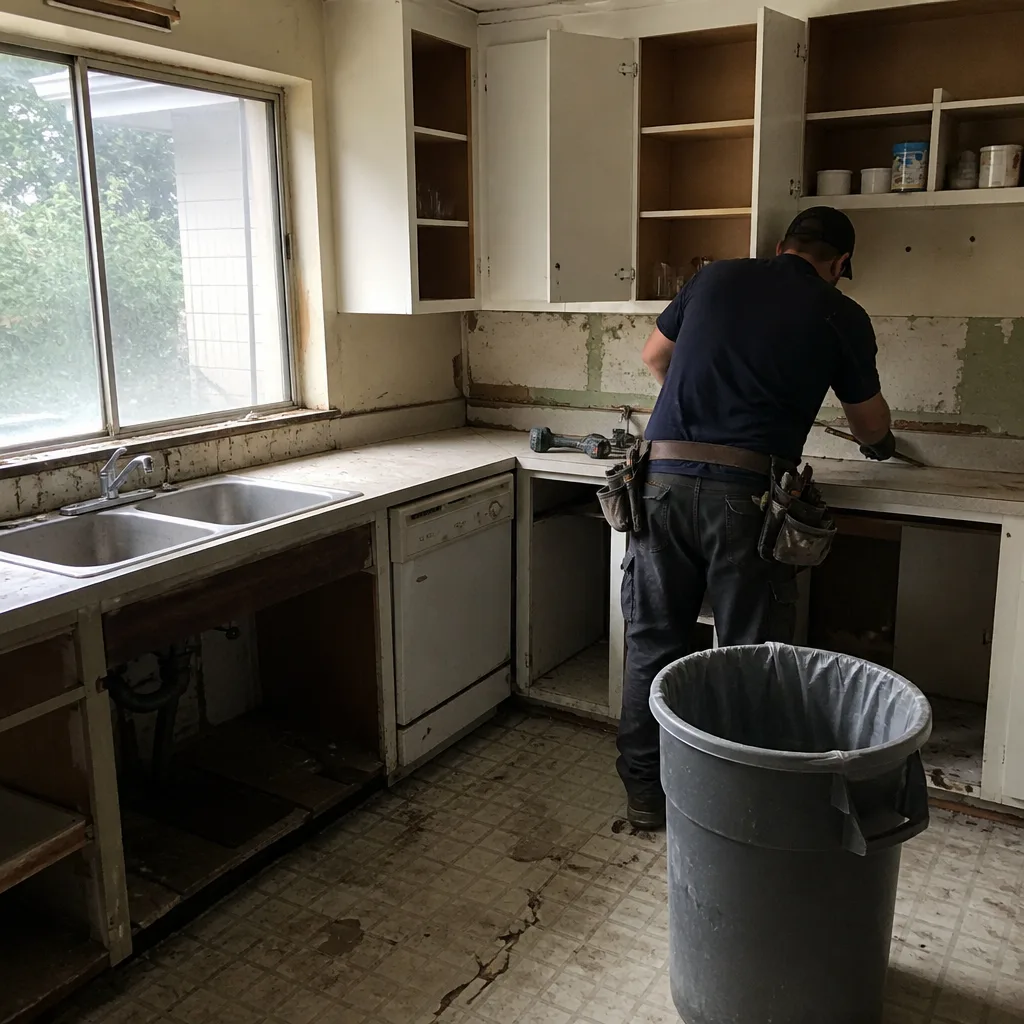 Before
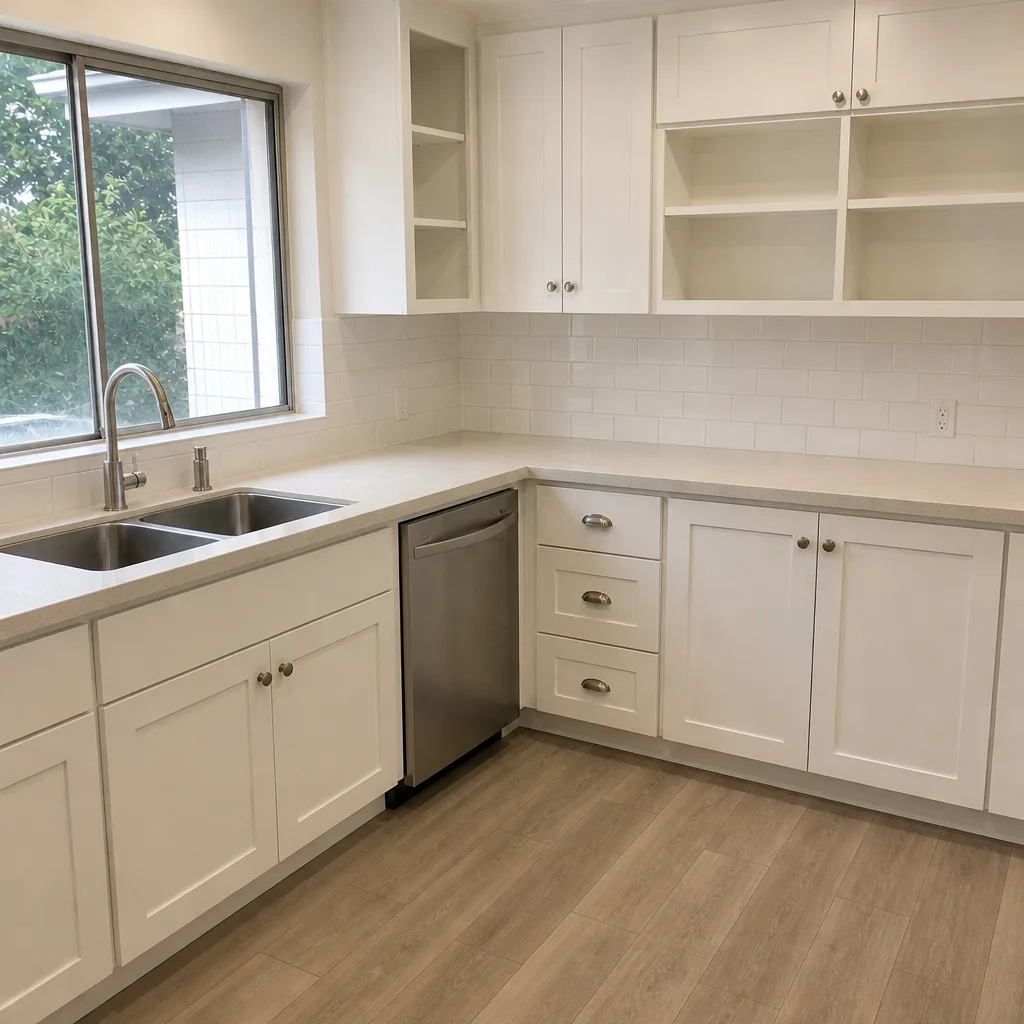 After
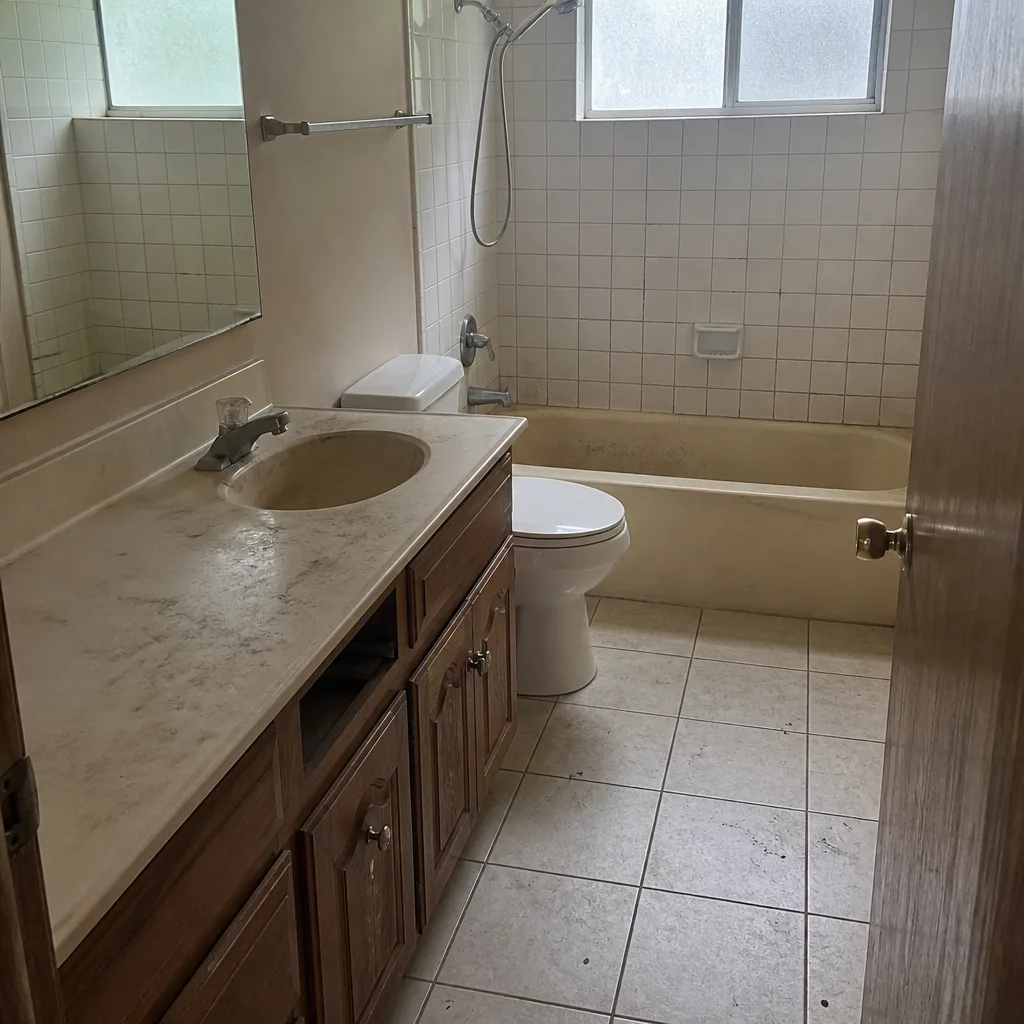 Before
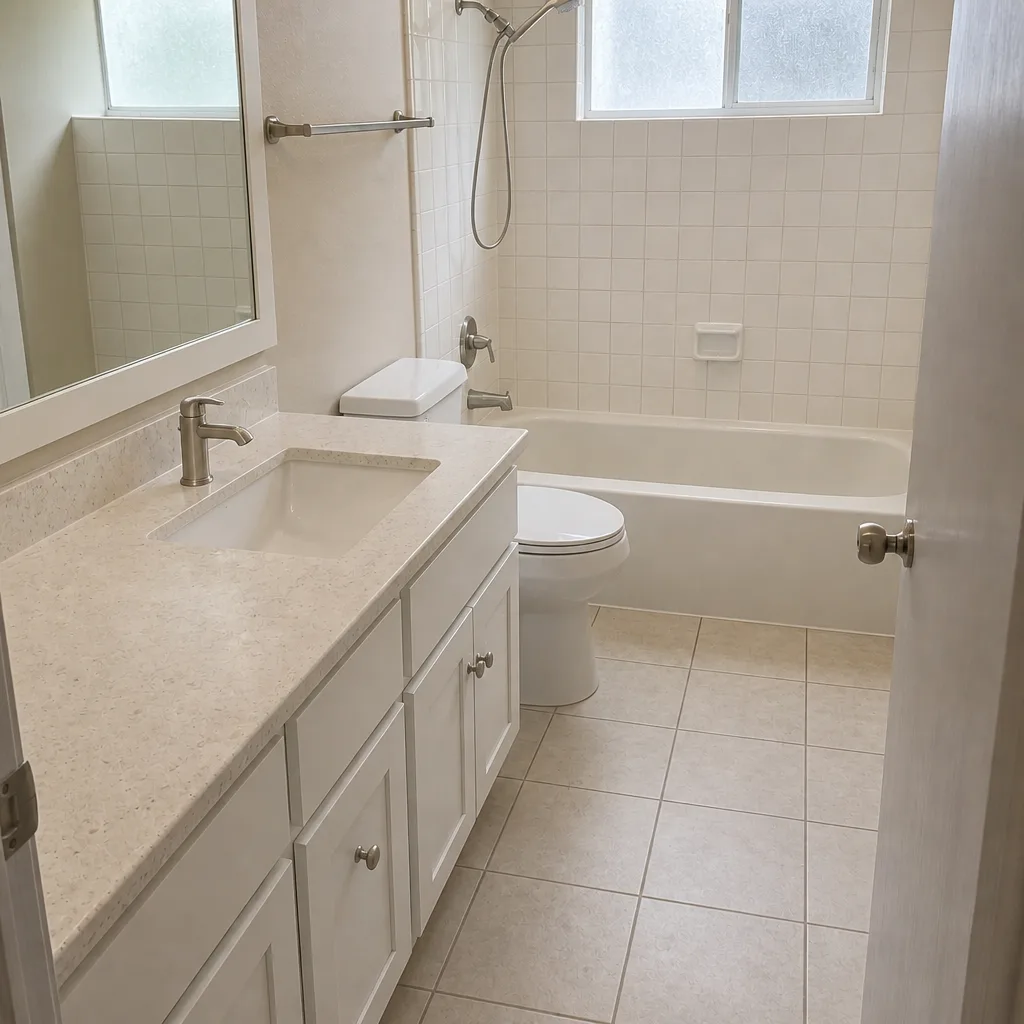 After
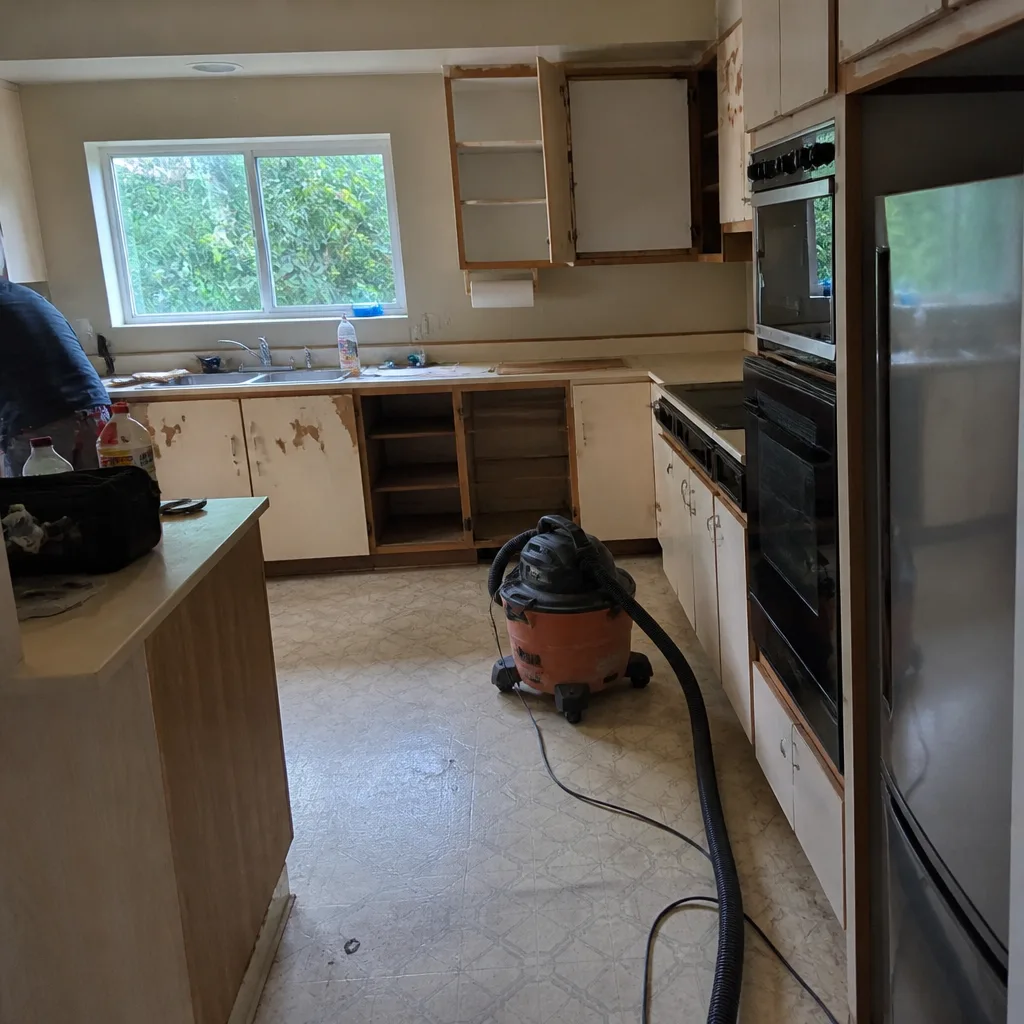 Before
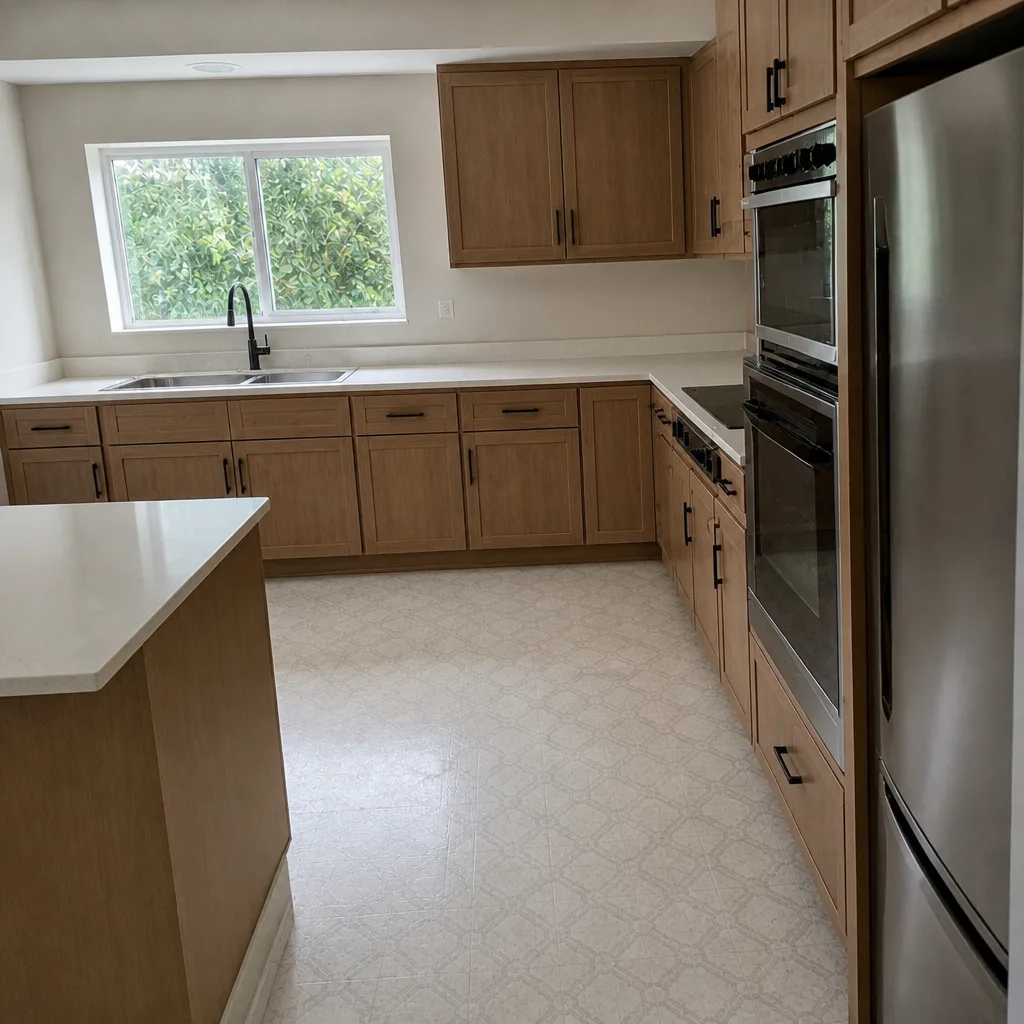 After
When to Call a Professional
A remodel is professional work by definition. But several specific scenarios cross the line from “you could DIY this” to “you really shouldn’t.” Any structural change, wall removal, or new load path needs a licensed structural engineer and a contractor working from permitted drawings. Any electrical panel or wiring work, any gas line, and any plumbing relocation needs a licensed professional, because the stakes are real and Bellevue inspections are strict. Waterproofing in bathrooms is technical enough that a DIY error won’t show up until months after the walls close. And James Hardie installation has specific requirements that, if missed, void the warranty. If your home has lead paint (common in older Eastside houses), that’s a professional-only job. For everything in between, our home remodeling team at Bellevue Remodeling Pros offers free estimates in Bellevue – call (425) 675-0145. We answer 24/7, with fast dispatch from 7am to 7pm.
Frequently Asked Questions

A typical Bellevue kitchen remodel takes several weeks to a few months from demolition to final paint, and the biggest variable is the permit timeline through City of Bellevue Development Services. Add time for cabinet and countertop lead times, which vary by product and brand. Call (425) 675-0145 for an estimate on your specific scope – estimates are free.
Yes for most work that touches structure, mechanical, electrical, plumbing, or the home’s footprint. Cosmetic changes like paint and flooring usually don’t require a permit. Confirm the specifics with City of Bellevue Development Services before you commit to a schedule, since requirements depend on scope. Call (425) 675-0145 and we can help you understand the path.
Cambria, Silestone, and Caesarstone. Each brings a different set of finishes and strengths, and the point of having all three is that you choose the countertop that fits your household, not the one a single supplier carries. Estimates are free, so call (425) 675-0145 to talk through your options.
A realistic contingency depends on how much of your project touches structure, plumbing, or the exterior envelope, and on current labor and material conditions in Bellevue. A cosmetic refresh needs less than a structural remodel. Build the number into your written estimate conversation up front. Call (425) 675-0145 to get a line-item estimate with contingency accounted for.
Yes. Flooring installation, interior and exterior painting, and the broader remodeling scope can all run under one company with one project lead. That means no scheduling gaps between the cabinet installer and the painter, and no one pointing at someone else if something slips. Call (425) 675-0145 to scope a project that combines them.
We’re familiar with James Hardie exterior products and the product-specific installation knowledge that keeps the warranty intact. That means correct flashing, fastening, and clearance details, installed per manufacturer spec. Call (425) 675-0145 to talk about exterior products in your scope – estimates are free.
The Bottom Line
A Bellevue remodel that succeeds is one where the planning accounted for the city’s permit path, the climate’s moisture behavior, and the supplier question before the design froze. Get those three right and your project has the foundation that makes everything else, from framing to final paint, hold up under the scrutiny of real life. Then pick a contractor whose brand access lets you make the choices you actually want: cabinets from KraftMaid or Wellborn, countertops from Cambria, Silestone, or Caesarstone, fixtures from Kohler, Toto, Grohe, Moen, Delta, American Standard, or Blanco. Call (425) 675-0145 for your free estimate. We answer 24/7, with fast dispatch from 7am to 7pm, Sunday through Friday.
Written by the team at Bellevue Remodeling Pros.