Last updated November 25, 2026







Free written scope consultation - allowances, timeline, and change-order rules on paper before a single trade is scheduled
Seasonal Construction Care for Bellevue: Year-Round Homeowner’s Guide
Most homeowners in Bellevue think about their house in one season: the one where something breaks. That’s the expensive way to run a home. The truth is that Bellevue doesn’t hand you one bad season for construction – it hands you four, and each one stresses a different part of the house. Winter loads up moisture in places you can’t see. Spring reveals what winter left behind. Summer gives you a short, crowded window to get exterior work done. Fall is your last honest chance to move water away from the foundation before the rain settles in again. This guide maps Bellevue’s actual climate rhythm to the envelope, systems, and materials most at risk in each window, so you can schedule small repairs that head off the big ones. By the end you’ll know what to check, when to check it, and how to stagger a remodel across the year.
Quick Answer
Seasonal construction care in Bellevue comes down to four windows: clean gutters and grade water away in fall before the clay soils saturate, protect recently finished interiors and watch for condensation in winter, inspect flashings and caulk joints in spring once the wet season eases, and book exterior painting, roofing, and concrete in the narrow summer window while trades are still available. Do the small tasks on schedule and you avoid the five-figure remediation projects that start as a slow leak behind a fascia board.
Styles & brands we work with
- Kitchen remodeling
- Bathroom remodeling
- Home additions & ADU
- Roofing
- Windows & doors
- Driveway & pavers
- Fence
Table of Contents
- Why Bellevue Homes Need a Seasonal Approach
- Fall (September to November): Drainage and Water Management
- Winter (December to February): Protecting Recent Remodels
- Spring (March to May): The Post-Wet-Season Inspection
- Summer (June to August): The Compressed Exterior Window
- How to Stagger Remodeling Projects Across Bellevue’s Seasons
- Materials That Hold Up in Bellevue’s Climate
- Common Mistakes to Avoid
Why Bellevue Homes Need a Seasonal Approach
Bellevue sits in a climate that’s mild in temperature but relentless in moisture. Winters are cold and wet without being brutal, which sounds forgiving – until you realize that sustained damp, more than hard freeze, is what drives most of the damage we see. Water sits in fascia, sill pans, and roof penetrations for weeks at a time. Nothing dries out fast because the air stays humid and the sun stays low. A slightly failed caulk joint that would bake dry in a drier climate just keeps feeding moisture into the wall assembly here.
The soils matter too. Much of Bellevue sits on clay-heavy ground that drains slowly compared to sandy profiles. That changes how you handle roof runoff and grading. Water that would soak away quickly elsewhere pools against a foundation here, finds the path of least resistance, and shows up in a crawlspace or a basement corner months later. The neighborhoods up the hill toward Cougar Mountain and the older pockets near downtown both deal with this, just in different ways depending on lot slope and how the original drainage was built.
The practical upshot: in Bellevue, construction care is a calendar, not a checklist you run once. Each season loads a different part of the house, and each season gives you a chance to relieve that load before it compounds. The rest of this guide walks through all four, then shows you how to fit a real remodel into the rhythm rather than fighting it.
Fall (September to November): Drainage and Water Management
Fall is where you win or lose the whole year. The rain returns, and everything you didn’t move away from the house in September becomes a winter-long problem. On Bellevue’s clay soils, drainage backs up faster than most homeowners expect, because the ground itself stops absorbing. By November, the soil is near saturation and every downspout is dumping water at the foundation instead of into it. This is your most important window for the cheap tasks that protect expensive assemblies.
Work through these in order, and don’t skip the boring ones:
- Clear the gutters and test the downspouts. Run water through every downspout and watch where it lands. A downspout that dumps beside the foundation is worse than no gutter at all, because it concentrates the flow.
- Extend downspout discharge away from the house. Splash blocks help, but a proper extension that carries water several feet out and onto a slope does more. On flat lots, this is the single most effective thing you can do.
- Re-grade the soil so it falls away from the foundation. Soil settles over the year. Walk the perimeter and check that the grade slopes away, not toward. Low spots against the wall are where water pools and pushes in.
- Inspect the roof penetrations you can safely see from the ground. Look at flashings around vents, chimneys, and skylights with binoculars. Anything lifted, cracked, or pulling away needs attention before the heavy rain.
- Check the crawlspace and basement for damp. Early fall is when you can still dry things out. Once the wet season locks in, a damp crawlspace stays damp until spring.
- Clear debris from window wells and area drains. Leaves collect in exactly the spots designed to move water away, then block them.
If fall work turns up a drainage problem that needs real correction – regrading, a new drainage run, or repairs to siding that’s been wicking moisture – that’s the point to get it quoted rather than patched. Water management is one of the most common reasons a homeowner ends up planning a larger home remodeling project, because fixing the symptom without fixing the source just moves the problem indoors.
Winter (December to February): Protecting Recent Remodels
This is the section that matters most if you finished a remodel in the last year or two. Bellevue’s winter isn’t a hard freeze, but it’s a sustained cold-wet period, and that combination puts fresh construction at risk in ways a drier climate doesn’t. The danger isn’t usually ice damage. It’s condensation – warm, moist interior air finding its way into a cold assembly and condensing where it can’t escape. New tile showers, freshly installed exterior doors, and new paint are the three areas that show stress first, and all three are manageable if you understand what’s happening.
Tile showers
A properly built shower depends on a waterproof substrate behind the tile, not the tile itself. In winter, the inside of a shower is the wettest, warmest spot in the house, and the wall behind it is cold. Protecting that assembly means running the exhaust fan during and after showers, keeping the room from staying saturated, and watching the grout and caulk lines for any cracking or shrinking as the season goes. Small gaps in grout aren’t cosmetic in a wet environment – they let water reach the substrate. If your remodel used a Schluter waterproofing system behind the tile, that’s the layer doing the real work, and it’s why the detail matters more than the surface. We specify those systems precisely because they handle this exact wet-cold cycle.
New exterior doors and windows
New doors need their weatherstripping, thresholds, and seals checked once conditions turn consistently wet. A door that sealed fine in August can develop a small gap as the frame moves with the cold. Run your hand around the edges on a windy day and feel for drafts. Watch the threshold for water staining, which tells you the sill pan or the seal beneath needs attention before it wicks into the framing. This is a five-minute habit that protects a five-figure door installation.
Fresh paint and interior finishes
Paint cures by off-gassing as it dries, and it needs decent airflow to do that without trapping moisture. In winter, homes get closed up and heated, which is the opposite of airflow. Keep rooms ventilated while new paint finishes curing, and watch for condensation on cold exterior walls. Bathroom exhaust and kitchen venting should run a bit longer in winter than they do the rest of the year. If you’re seeing persistent condensation on windows or walls, that’s moisture with nowhere to go, and it’s worth addressing before it reaches the drywall.
Winter is also the right time for indoor projects. Kitchens and baths can be built while the weather does its worst outside, which is why a lot of our kitchen remodeling and bathroom remodeling work schedules into the colder months. You’re not losing exterior days, and you’re using the season where indoor work makes the most sense.
Spring (March to May): The Post-Wet-Season Inspection
Late February is the most expensive month most Bellevue homeowners ignore. It’s when winter moisture that’s been sitting in fascia, sill pans, and roof penetrations since November finally becomes visible – right after the damage is already done. By March, you’re not preventing the problem, you’re finding it. That’s still far better than finding it in June, when the wet season is over, small openings have dried out and gone quiet, and the only thing left to notice is the repair bill. Spring inspection is a search-and-address protocol, and it’s worth doing before Bellevue’s inspection and permit season gets busy.
Work the list while the evidence is still fresh:
- Walk the exterior and look for staining, bubbling, or soft spots in siding, trim, and fascia. Water leaves a signature even after it dries. Anywhere paint is peeling in a pattern rather than uniformly, look closer.
- Check every caulk joint and sealant line around windows, doors, corners, and where different materials meet. Caulk shrinks and cracks over a wet winter. Re-caulking before summer is one of the highest-return small jobs on the house.
- Inspect flashing around the roof and at wall-to-roof transitions. This is where most leaks start. Lifted, cracked, or missing flashing needs a professional look, not a tube of sealant over the top.
- Check deck ledger connections and the hardware that holds them. The ledger is where the deck attaches to the house, and it’s the most critical connection on the whole structure. Look for rust, loose fasteners, and any sign of water getting behind the siding at that line. This is a safety item, and if anything looks off, get it evaluated by someone qualified.
- Test the ground again for grade and drainage now that the soil has been saturated all winter. Settling shows up after a wet season, not during it.
- Look at the interior for the tell-tales: water stains on ceilings, bubbling paint, soft drywall near windows. These point you back to the exterior location that needs attention.
Spring is also the time to schedule the work you found. Inspectors, roofers, and exterior trades fill up fast once the weather improves, so getting a written estimate in March beats calling in May. If the inspection turns up something that needs correcting as part of a larger project, that’s a good moment to plan it in.
Summer (June to August): The Compressed Exterior Window
Bellevue has a narrow window for exterior work, and it’s shorter than the calendar suggests. The wet season lingers into spring and returns in the fall. That leaves roughly June through August for painting, roofing, concrete, and siding – and everyone in the region knows it. The compressed market means the good trades book out well ahead, so the homeowners who get their exterior work done are the ones who called in spring, not the ones who called in July.
Here’s what belongs in that window, and how to actually get it booked:
- Exterior painting. Paint needs dry, mild conditions to cure properly. Bellevue’s summer gives you that window. This is the single most weather-dependent exterior job, so it fills first.
- Roofing. Roof installs want dry weather for the tear-off and for the shingles to seal. A wet-side-of-the-year roof replacement invites problems with the deck and the seal.
- Concrete work for driveways, walkways, and patios. Concrete needs reasonable curing conditions without the freeze-thaw and saturation of the wet season.
- Siding, windows, and doors where the opening has to stay open for installation. You want the house sealed back up before the rain returns.
- Exterior prep and inspections that feed into the work above – washing, scraping, sealing, and evaluating the substrate before the painting crew arrives.
Booking strategy matters as much as the work itself. Call in spring for summer dates. Get a written estimate that itemizes the scope so you’re comparing the same thing between bids. And build a little buffer into the schedule: summer work that slips a week is normal, but work that slips into September is racing the rain. Materials matter here too. We work with James Hardie siding on many Bellevue exteriors because the product is engineered for wet climates, but it needs product-specific installation to keep its warranty intact – the detail most crews skip when they’re rushing a short season. KraftMaid and Wellborn cabinetry don’t live outside, but they’re worth thinking about for the indoor packages that ride alongside exterior work.
How to Stagger Remodeling Projects Across Bellevue’s Seasons
The homeowners who get the most out of a big remodel aren’t the ones who start everything at once. They’re the ones who sequence projects against Bellevue’s seasons, using permit timing, contractor availability, and Pacific Northwest material lead times as advantages instead of obstacles. A little planning here is worth real money and real stress.
Here’s a sequencing approach that works in Bellevue:
- Plan and permit in late fall and winter. Permit reviews take time, and the quieter season for many trades is a good window to get drawings, selections, and approvals done. You’re not competing for inspection slots and you can walk the process without holding up a crew.
- Build interiors in winter. Kitchens and baths are indoor work. Demolition, cabinetry, countertops, plumbing, and tile all happen inside, so the weather outside is irrelevant. This is when contractor schedules open up and when material orders can be worked through without the summer crunch.
- Order long-lead materials early. Cabinetry, windows, doors, and specialty surfaces can take time to arrive, and the Pacific Northwest supply chain is no faster than anywhere else. Ordering in winter for a summer install keeps your schedule honest.
- Do the exterior in summer. Painting, roofing, siding, and concrete all want the dry window. Line these up in spring so the work lands in June through August.
- Close out and inspect in early fall. Finish the exterior work, do a final walkthrough, and get any punch list items done before the rain return.
Material selection is where a lot of homeowners get stuck, and it’s worth thinking about early because lead times follow it. We carry access to three quartz and stone surface brands – Cambria, Silestone, and Caesarstone – so your countertop choice can be driven by how you actually use the kitchen rather than what happens to be in stock. Cabinetry from both KraftMaid and Wellborn gives you two respected semi-custom lines to compare for the way the space gets used over decades. On fixtures, we work across Kohler, Toto, Grohe, Moen, Delta, American Standard, and Blanco, so you’re not steered away from the brand you actually want. If your exterior is part of the project, our experience with James Hardie products and the wider GAF, CertainTead, and Owens Corning roofing lines matters for getting the installation details right in Bellevue’s wet climate.
Staggering also lets you spread the work across a single company rather than juggling three. That matters more than it sounds like it should. When one company handles the home remodeling scope, the flooring, and the interior and exterior painting, you have one point of contact and one schedule instead of three contractors pointing at each other when something doesn’t line up.
Materials That Hold Up in Bellevue’s Climate
Specific products perform better than others in a climate that’s wet and mild rather than cold and dry. If you’re planning work, choose materials for the conditions they’ll actually live in. James Hardie fiber cement siding is engineered for wet climates and is a common choice on Bellevue exteriors, but it needs the right installation detail to keep its warranty intact. Roofing from GAF, CertainTeed, and Owens Corning gives you options across the price range, and the installation matters more than the label – flashings and underlayment fail before the shingles do.
Inside, material choices shape how a space handles moisture and daily wear. A non-porous quartz like Cambria won’t stain or harbor bacteria the way softer surfaces can, which matters in a kitchen or a busy bathroom. Tile in wet rooms needs the waterproof substrate behind it to be right, which is why we specify a proper water-management system rather than treating the tile as the barrier. Cabinetry from KraftMaid and Wellborn is built for the long haul rather than for the listing photos, which is the point when you’re living with a kitchen for a couple of decades.
Fixtures are the other place climate and durability intersect. A door or window that seals properly against Bellevue’s wet winters protects the assembly behind it. Fixtures from Kohler, Toto, Grohe, Moen, Delta, American Standard, and Blanco let you choose on design and function rather than being steered. The common thread: buy for the climate and the detail, not just the surface look.
Common Mistakes to Avoid
- Skipping the fall gutter clean before the heavy rain. On Bellevue’s clay soils, a clogged downspout dumps water at the foundation all winter and the soil can’t absorb it. This is the cheapest task on the calendar and the one most often deferred.
- Assuming winter damage will show itself right away. Moisture sits in fascia, sill pans, and penetrations for months before it’s visible. If you only inspect in spring, you’re finding damage that’s already been done rather than preventing it.
- Painting the exterior too early. Bellevue’s wet season lingers, and paint applied before the conditions are right cures poorly and fails early. Wait for the dry window rather than squeezing it into spring.
- Treating caulk as permanent. Caulk shrinks and cracks every winter. Re-caulking in spring before summer is a small job that protects the assemblies behind it.
- Ignoring deck ledger connections. The ledger is the most critical connection on the structure and the most often overlooked. Any sign of rust or loose fasteners needs a qualified look.
- Calling exterior trades in July for summer work. Bellevue’s compressed summer window means the good crews book out early. Call in spring for summer dates.
- Starting a remodel without sequencing it to the seasons. Permits, material lead times, and trades don’t move as fast as an eager homeowner wants. Plan in winter, build interiors in winter, do exteriors in summer.
See the difference
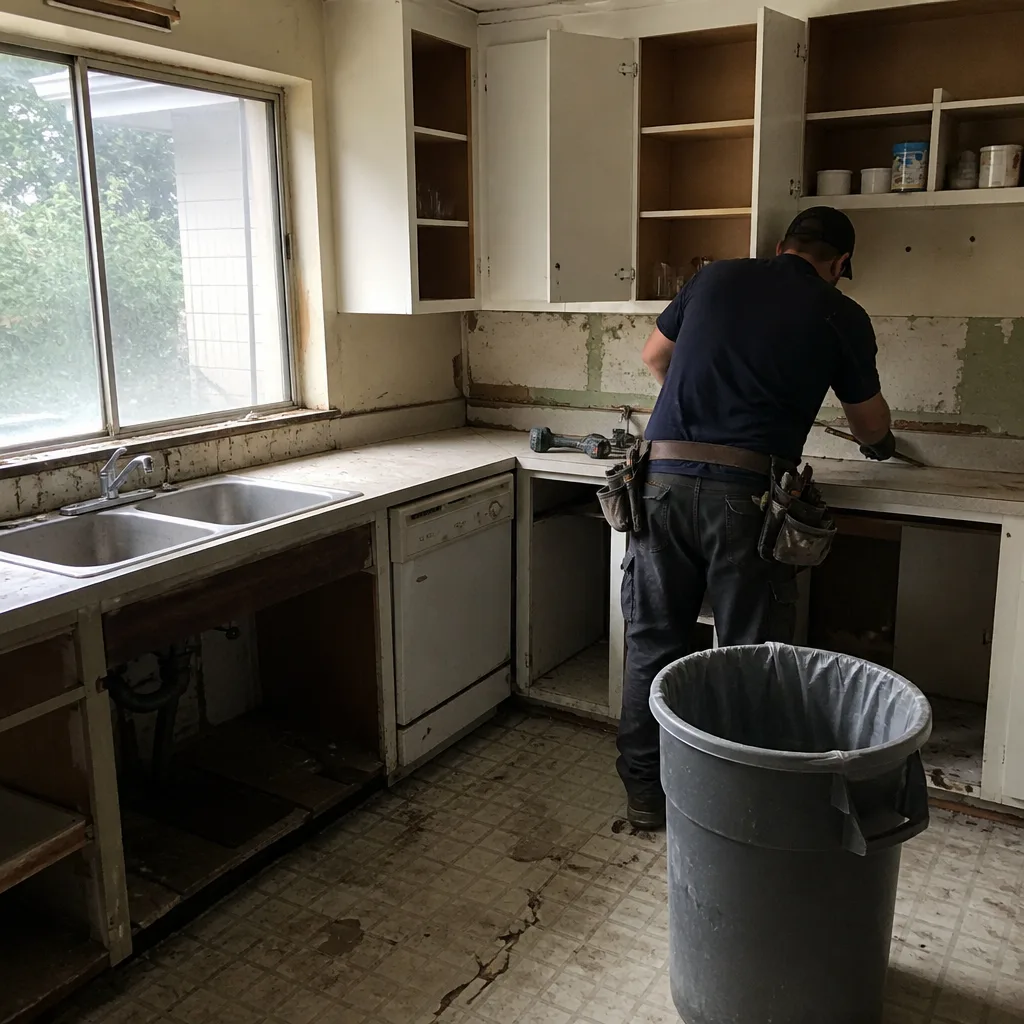 Before
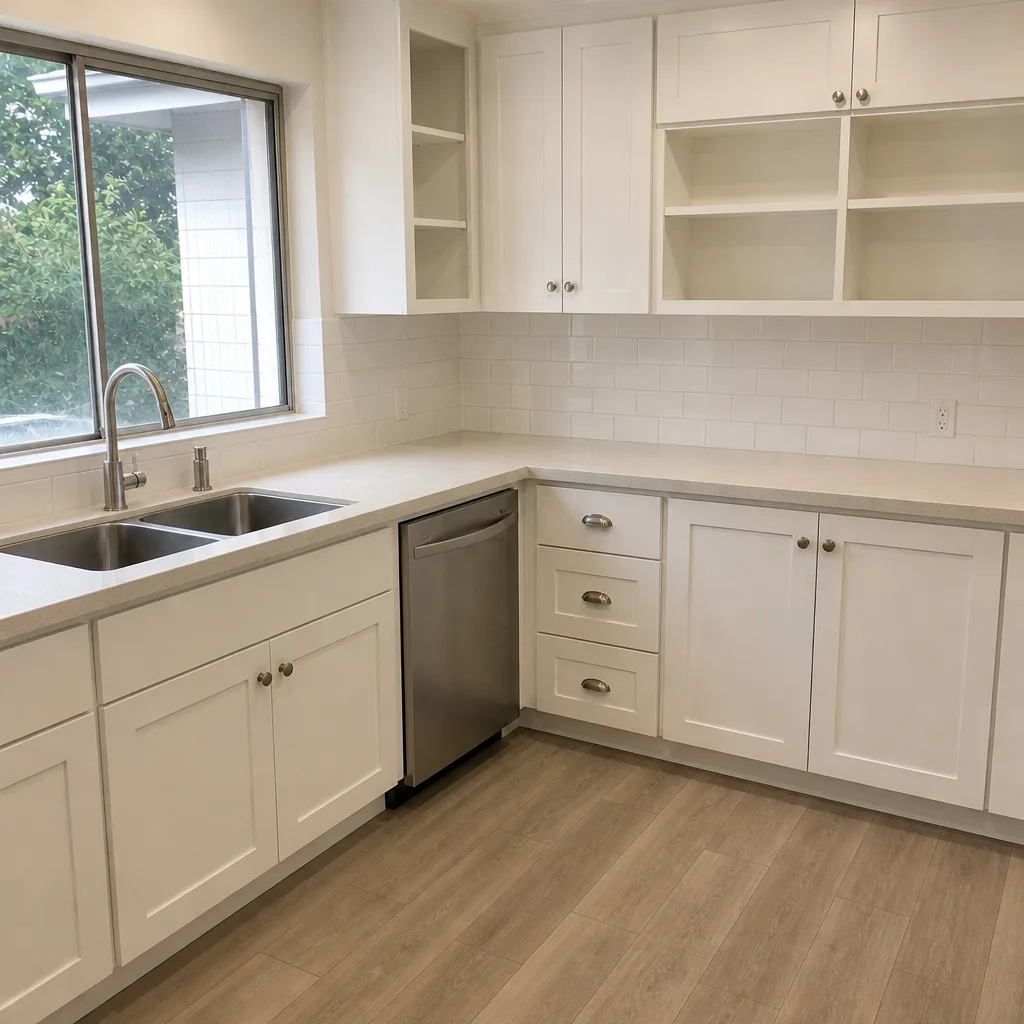 After
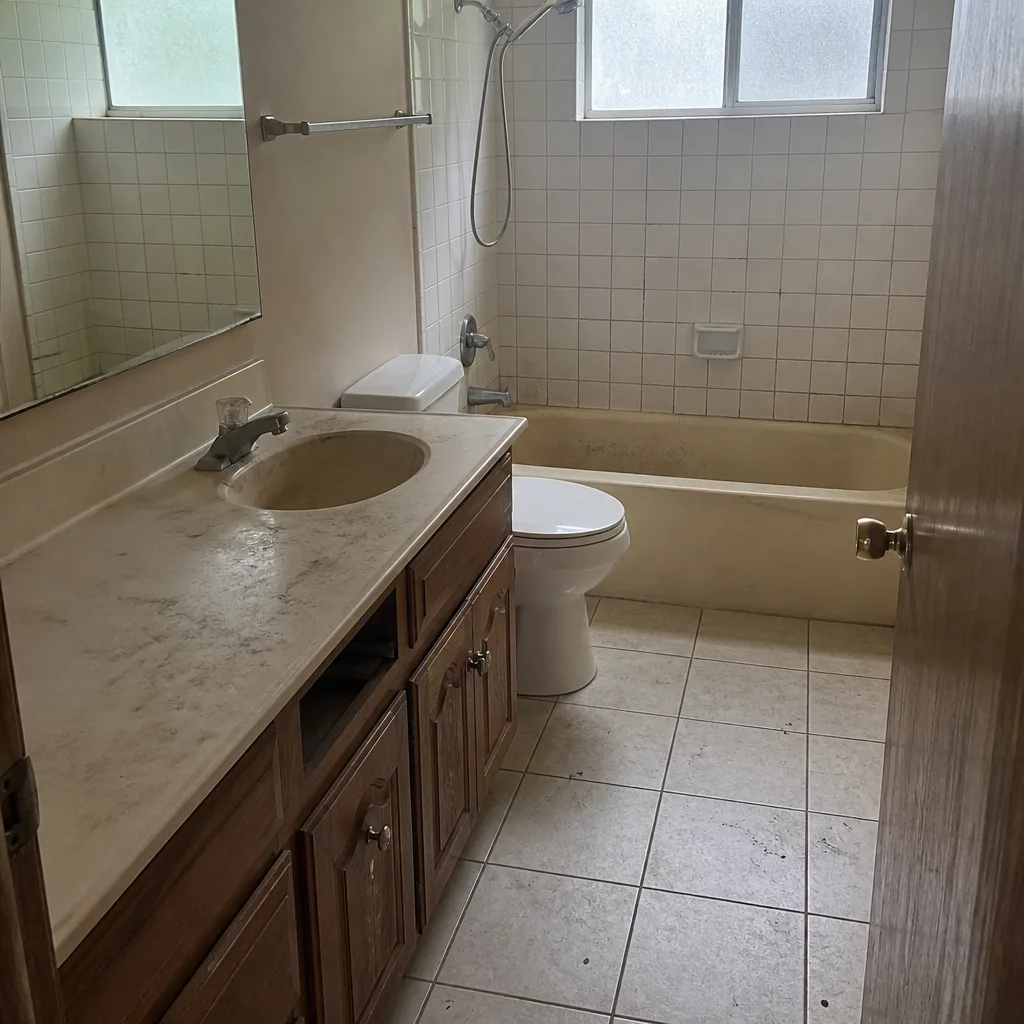 Before
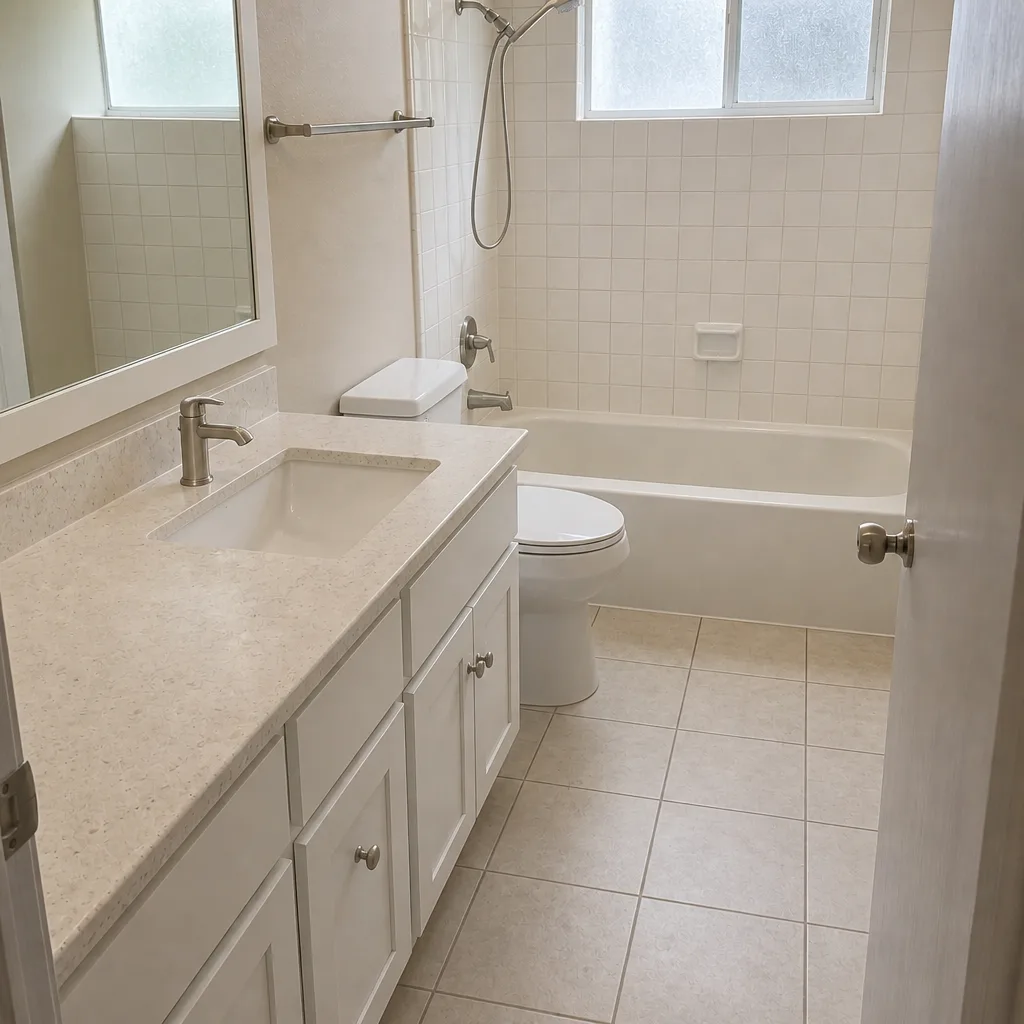 After
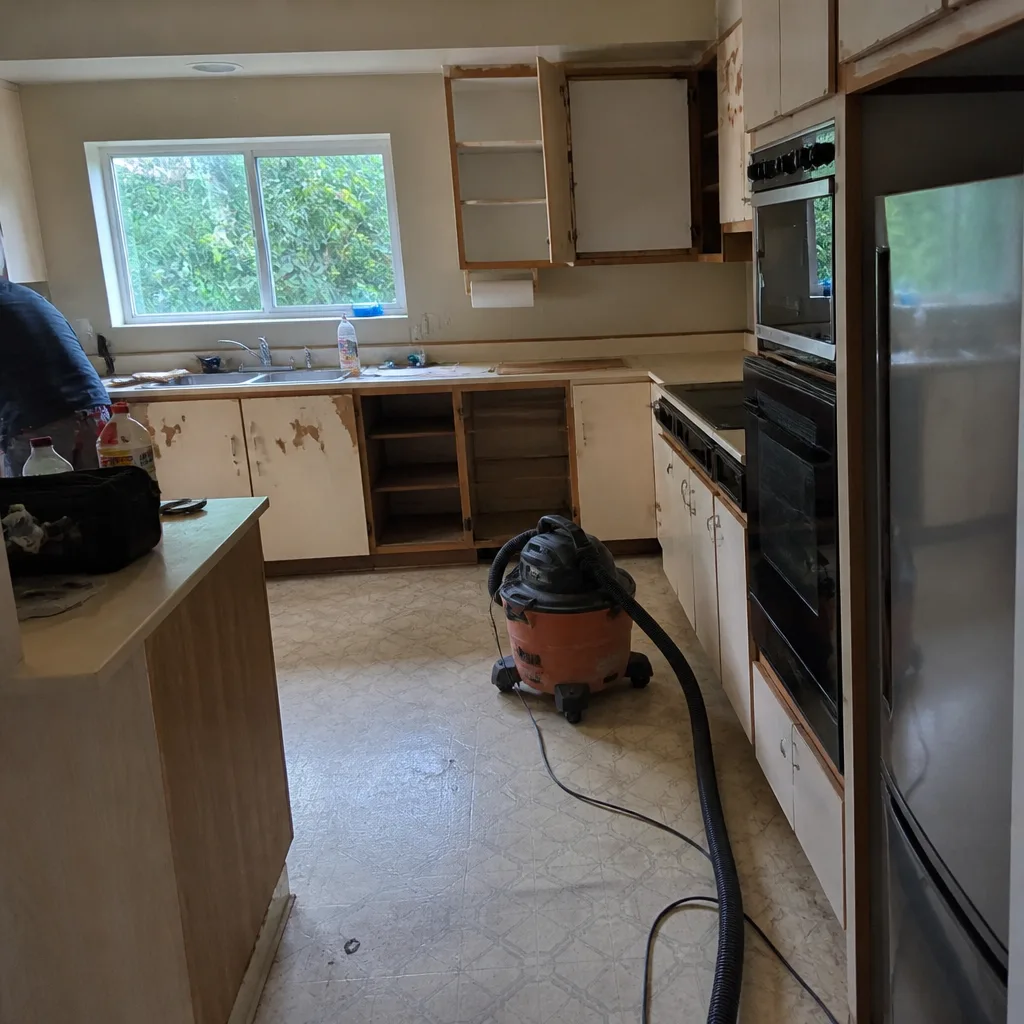 Before
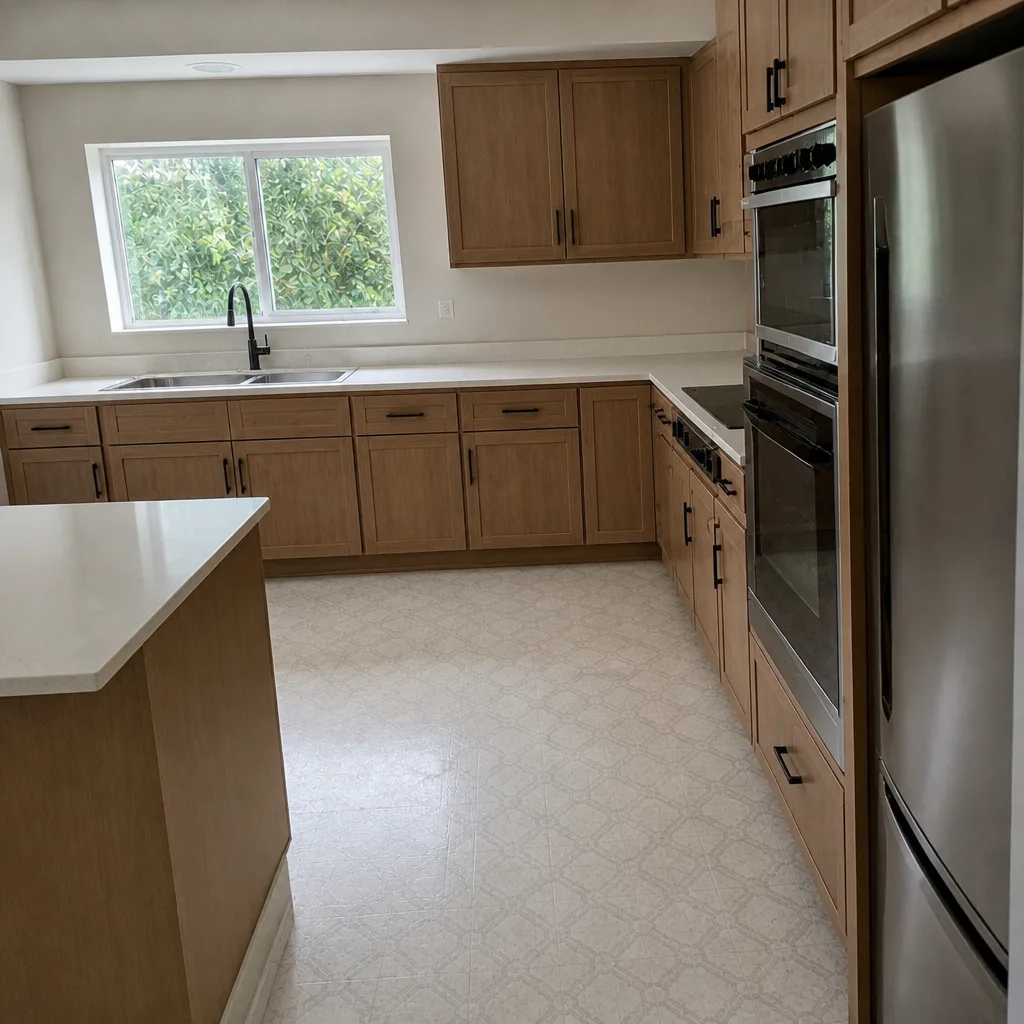 After
When to Call a Professional
Plenty of seasonal maintenance is DIY territory: clearing gutters, extending downspouts, re-caulking joints, watching for condensation. The line moves when the work involves the structure, the envelope, or anything electrical or gas-related. Call a professional when you see water staining on ceilings or walls, soft or bubbling wood on the exterior, a lifted or damaged roof flashing, loose deck hardware, or a crawlspace that stays wet after the season. Those point to problems that need diagnosis, not a patch. Roof work and anything at height deserves an experienced hand for safety. So does any electrical or gas work that turns up during a remodel. Bellevue Remodeling Pros offers free estimates in Bellevue – call (425) 675-0145. Our technicians have up to 14 years of experience, and the estimate comes in writing so the price is set before work starts.
Frequently Asked Questions
Start with fall gutter cleaning and moving water away from the foundation, because that’s where most winter damage begins on Bellevue’s clay-heavy soils. Extend downspouts, re-grade soil so it falls away from the house, and check the crawlspace for damp before the wet season locks in. Call (425) 675-0145 for a free estimate if the fall walk turns up something bigger.
Summer, roughly June through August, is the reliable window for exterior painting in Bellevue. Paint needs dry, mild conditions to cure properly, and the wet season lingers into spring and returns in fall. Book the painting crew in spring for summer dates, because Bellevue’s compressed exterior window fills up fast. Call (425) 675-0145 to get your estimate on the calendar.
Run the exhaust fan during and after showers, keep the room from staying saturated, and watch grout and caulk lines for cracking as the cold sets in. Winter in Bellevue is damp rather than freezing, so condensation is the main risk to fresh tile, not ice. Call (425) 675-0145 if you see persistent moisture or failing seals – a free estimate tells you what needs attention.
Most structural, electrical, plumbing, and gas work needs a permit, and so do many additions and significant alterations, while routine maintenance like re-caulking and gutter cleaning generally does not. Rules vary, so ask your city’s building department for your specific project. Call (425) 675-0145 and we’ll walk through the scope and the permit question with you.
The written estimate sets the price, so work starts against a fixed, itemized scope rather than an open-ended number. Changes you add mid-project, or problems hidden behind the walls, get quoted before anyone proceeds. Call (425) 675-0145 to get your free written estimate and know where you stand before work begins.
Timeline depends on scope, materials, and how quickly permits and long-lead items come through, and it’s the kind of thing that should be put in writing up front. Kitchens generally take longer than baths because of cabinetry, countertops, and appliance lead times. Call (425) 675-0145 and we’ll give you a realistic schedule with the estimate.
The Bottom Line

Bellevue’s construction calendar isn’t about one bad season, it’s about four different ones loading four different parts of the house. Fall is for moving water away before the rain. Winter is for protecting fresh interiors and watching for condensation. Spring is for finding what winter left behind and getting it quoted while trades are still available. Summer is your short, crowded window for anything exterior, so book it in spring. Stagger your bigger projects to fit: plan in winter, build interiors in winter, paint and roof and pour concrete in summer, close out in early fall. Do the small tasks on time and the big remediation never has to happen.
If you’re ready to plan your next project around Bellevue’s seasons, Bellevue Remodeling Pros is here to help. We bring the brand knowledge to match the right materials to your home – whether that’s quartz from Cambria, cabinetry from KraftMaid or Wellborn, or a siding system that holds up to the wet season. Call (425) 675-0145 for a free estimate. We answer 24/7. Fast dispatch from 7am to 7pm, Sunday through Friday.
Written by the team at Bellevue Remodeling Pros.