Last updated November 25, 2026






Free written scope consultation - allowances, timeline, and change-order rules on paper before a single trade is scheduled
How to Hire a Construction Contractor in Bellevue: A Step-by-Step Guide
Most Bellevue homeowners spend more time researching their refrigerator than their contractor, even though the contractor controls five figures of decisions the homeowner assumes they’re making themselves. Here’s the thing nobody tells you: the moment you sign a remodeling contract, you’ve also quietly signed up for a materials negotiation. Who your contractor buys from, and how much access they actually have, determines whether you get to choose Cambria or Caesarstone, KraftMaid or Wellborn, or whether you get whatever their one supplier happens to stock. This guide walks you through licensing, insurance, supplier vetting, contract language, and the Bellevue-specific details that separate an informed hire from an expensive lesson. By the end, you’ll know exactly what to ask before you sign.
Quick Answer
To hire a construction contractor in Bellevue, verify their Washington State registration, bond, and insurance through the Department of Labor & Industries before anything else. Then confirm they pull their own permits (not owner-pull), check that their portfolio shows consistent finish quality rather than one hero project, and ask directly about supplier relationships, because a contractor’s brand access decides what material choices you actually get. Get everything in a written, line-item estimate where the written estimate sets the final price.
Styles & brands we work with
- Kitchen remodeling
- Bathroom remodeling
- Home additions & ADU
- Roofing
- Windows & doors
- Driveway & pavers
- Fence
Table of Contents
- How Do You Verify a Contractor’s License in Bellevue?
- What Do Bond and Insurance Numbers Actually Mean?
- Who Pulls the Permit, and Why Does It Matter?
- How Do You Check a Contractor’s Real Supplier Access?
- How Do You Read a Portfolio for Finish Consistency?
- Why Do Allowances Blow Up Bellevue Budgets?
- What Should a Written Estimate Include?
- Common Mistakes to Avoid
- When to Call a Professional
- Frequently Asked Questions
- The Bottom Line
How Do You Verify a Contractor’s License in Bellevue?
You verify a contractor in Bellevue by looking them up on the Washington State Department of Labor & Industries contractor registration database before you sign anything. This is not the same as a business license. The L&I registration is the legal credential that allows a contractor to take on construction work in the state, and it should list the contractor’s registration number, bond status, insurance status, and current standing. If a contractor cannot produce a registration number, stop there.
To run the check, follow these steps:
- Ask the contractor for their registration number in writing, along with the exact business name on the registration. They should have it memorized or at hand.
- Search the L&I contractor registration lookup using the business name or registration number.
- Confirm the status shows as active and the registration is not suspended or expired.
- Check that the bond and insurance fields show current coverage, not lapsed.
- Confirm the registered business name matches the name on your contract and estimate, not a slightly different DBA.
What people miss is that a registration number means very little if you never cross-check it. Contractors can hold a valid registration while their bond has lapsed, and that gap only becomes your problem after a dispute. Our technicians have up to 14 years of experience, and the single most common licensing surprise we hear about is homeowners who trusted a business card and never looked up the number. In a Bellevue market where a kitchen gut-and-rebuild can run deep into five figures, the 90 seconds it takes to confirm an active registration is the cheapest insurance you’ll ever buy.
Don’t accept a photo of a certificate. Screenshots get faked. Use the state database directly and match the numbers yourself.
What Do Bond and Insurance Numbers Actually Mean?
Bond and insurance are two separate protections, and understanding the difference matters at Bellevue project scales. The bond is a small financial guarantee held against the contractor’s conduct, and it’s there so a homeowner with a valid claim has something to recover against when the contractor fails to perform or violates state rules. It is not a pot of money large enough to cover a full remodel. The insurance is what protects you when something goes wrong on the job, meaning bodily injury or property damage. Washington requires contractors to carry general liability insurance as a condition of registration, but the limits vary, and Washington’s requirements are not automatically generous enough for a large Bellevue renovation.
Here’s how to read the numbers:
- The bond amount is fixed by state law and is limited. Do not treat it as a project guarantee.
- The general liability coverage limits should be roughly proportional to the value of your project. For a major kitchen or structural job, ask for the certificate of insurance and confirm the general liability limit.
- Ask whether the contractor carries workers’ compensation coverage for their employees, and confirm it through L&I as well. If someone is injured on your property, the coverage question is not academic.
- Request the certificate of insurance directly from the insurance company or agent, not a photocopy from the contractor.
At Bellevue project values, a mid-range kitchen with custom cabinetry from KraftMaid or Wellborn and stone from one of the major quartz suppliers can hit a number well past what a minimal general liability policy would comfortably absorb if something goes wrong. Ask for the certificate. Read the dates. If a policy expires mid-project, ask for proof of the renewal. That’s a normal, professional request, and a contractor who’s organized won’t blink at it.
Who Pulls the Permit, and Why Does It Matter?
The contractor should pull the permit, not you. Washington law recognizes a meaningful difference between contractor-pulled permits and owner-pulled permits, and that difference transfers legal responsibility onto the homeowner when the contractor won’t pull it in their own name. When a contractor asks you to pull the permit so they can avoid the fee or the paperwork, the permit holder becomes the legally responsible party for the work. If the work is wrong, the accountability gets murky exactly when you need it to be clear. An owner-pull is a red flag worth walking away from.
This shows up most in Bellevue on projects where the scope is ambiguous: bathroom remodels that touch plumbing or electrical, kitchen remodels that move a wall or a gas line, water heater replacements, and any structural change. Each of those needs a permit and, in most cases, an inspection. Cities differ on exactly how much work triggers a permit, so ask Bellevue’s building department directly if you’re unsure whether your project needs one. “Most contractors skip it” is not a legal answer.
When the permit is pulled correctly, the process looks like this:
- The contractor files the permit in their own name and pays the fee through their contract with you.
- The city reviews plans and issues the permit before work begins.
- Required inspections happen at defined milestones, and the contractor schedules them.
- Final inspection closes the permit, and you receive documentation of the closed permit.
Ask your contractor to show you the permit number once it’s issued. Ask when the inspections are scheduled. A contractor who manages permits well will answer in specifics, not generalities. That pattern of specificity is one of the strongest signals you’ll get in a short conversation.
How Do You Check a Contractor’s Real Supplier Access?
You check supplier access by asking for account representatives, not logos. Any contractor can put a brand wall on a website. What separates a contractor with real relationships from one with stock photography is whether they can name their rep at Cambria, their cabinet distributor, or their local James Hardie supplier, and whether they’ve actively installed that brand’s products in recent projects they can show. We’ll be direct about the pattern: the brand logo is the beginning of the conversation, not the proof.
Here’s what to actually ask:
- “Who is your account rep at your countertop supplier?” A real relationship has a name behind it.
- “Which quartz brands do you install regularly, and how do you price them differently?” If the contractor names only one, that’s your answer about your choices.
- “Show me a project where you installed Cambria, and another where you used Silestone or Caesarstone.” Not the same brand every time.
- “What’s your cabinetry line, and what’s the alternative if I don’t like it?” KraftMaid and Wellborn live in the same tier, but they’re not the same product.
- “Which fixtures do you actually install?” Kohler, Toto, Grohe, Moen, Delta, American Standard, and Blanco are the seven most common. If you hear “whatever the supply house carries,” that’s the real answer.
This is where the guide’s core idea lives. When you’re knee-deep in a kitchen remodel, the difference between a contractor who has real relationships with three quartz brands and a contractor locked into one is the difference between a design that fits your life and one that fits their supplier’s inventory. The same is true for hard surfaces, cabinet brands, lighting, tile, and windows. If your contractor can’t name their source, they don’t have one. If you’re considering a kitchen remodeling project, ask these supplier questions early. They close more doors than any licensing technicality.
How Do You Read a Portfolio for Finish Consistency?
Read a portfolio for what repeats. Most contractor galleries are cherry-picked. The interesting question isn’t what a single hero project looks like. It’s whether the same finish level shows up across ten projects in a row. A remodeler who can show consistent tile alignment, consistent cabinet reveals, consistent paint edges, and consistent transition strips across projects has a process. A remodeler with one gorgeous kitchen and nine average ones has a lucky photographer.
Look for these markers:
- Multiple projects in Bellevue, not just in other cities. Local codes, local inspection culture, and local supply chains change how a project runs.
- Full-room shots, not just tight crops. Crops hide wonky reveals and awkward transitions.
- Consistent brand use across projects. If you see Cambria in one kitchen and no stone brand mentioned in the next, ask why.
- Photo dates. Finish quality that holds up across several years suggests systems, not a one-off crew.
- Before-and-afters where the transformation actually follows a coherent design, not just new surfaces bolted onto the old layout.
Finish consistency shows up in odd places. The tile edge, the outlet plate, the trim junction at a door casing, the caulk line where a Kohler fixture meets the counter. Those are the details that separate a well-run job from a competent one. Spend a little time on the details in the portfolio, and you’ll have a much better sense of what your finished room will look like. A competent remodeler will also talk to you about substrate, waterproofing, and edge protection like Schluter systems without being prompted. If those terms never come up, ask about them.
Why Do Allowances Blow Up Bellevue Budgets?
Allowances are where Bellevue remodeling budgets quietly explode. An allowance is a placeholder number in the contract for a material the contractor hasn’t priced yet, usually tile, fixtures, cabinet hardware, or stone. It looks reasonable on paper. Then you walk into a showroom in Bellevue, see the actual product, discover the allowance buys the entry-level version of it, and the upgrade is on you. Multiply that across tile, hardware, plumbing, stone, and lighting, and the gap between the allowance and the real selection is often larger than the entire labor line of the contract.
The fix is straightforward but requires asking uncomfortable questions before you sign:
- Ask for the allowance amount in writing for every material line, not a lump sum.
- Ask what product the allowance actually buys. Name a brand or hit a showroom and confirm.
- Ask the contractor’s selection process. Do they walk you through Cambria, Silestone, and Caesarstone side by side, or hand you a catalog and a deadline?
- Ask what happens if you go over the allowance. Is there a change order, and what does it cost?
- Ask what happens if you come in under. A written credit or a silent keeper?
We think of it as the materials negotiation you didn’t know you were in. Contractors who source from a single supplier tend to set allowances to match what that supplier carries. Contractors with wider access, cabinets from KraftMaid and Wellborn, stone from three major quartz brands, fixtures across seven manufacturers, tend to set more realistic allowances because they’re describing options that exist. The allowance line is the single most predictive number for total project cost, and it deserves as much attention as the labor line. If any of it feels fuzzy, ask for a line-item, written estimate. Fuzzy allowances plus a verbal promise is the classic recipe for a mid-project surprise.
What Should a Written Estimate Include?
A proper written estimate in Bellevue should include a line-item breakdown of materials and labor, the permit fee as a separate line, every allowance clearly stated, a schedule of work that names the sequence, payment terms tied to completed milestones rather than a single deposit, and a clear statement that the written estimate sets the final price. If any of those are missing, ask. If any of them are vague, ask again. This isn’t a hostile interview. It’s a normal proceeding.
The sections we look for in a well-built estimate:
- Scope of work in detail, room by room, with what’s included and what’s excluded.
- Material selections listed by brand and product where known, and by allowance where not.
- Labor line items, with the crew time roughly mapped to each step.
- Permit fees and any inspection costs spelled out separately from the labor.
- Schedule from demolition through punch list, with milestones for payment.
- Change-order process in writing, including how changes affect cost and timeline.
- The signed statement that this written estimate is the final price and the basis for any later change order.
Get several estimates for the same scope. Compare the allowances line by line. Compare the material brands. Compare the labor lines. When one estimate is dramatically lower, it’s usually because an allowance is unrealistically low, or a material brand is unstated, or a permit is missing. Ask the question. Then choose the estimate that shows its work, not the one that simply looks smallest. This same discipline carries over to bigger projects; if you’re approaching a home remodeling scope that touches multiple rooms, the estimate gets longer and the allowance detail gets more important, not less.
What Questions Should You Ask Before You Sign a Contract?
Before you sign a contract in Bellevue, ask at least the following in person: who pulls the permit, who is the primary point of contact throughout the project, who the subcontractors are and whether they carry their own insurance, what the change-order process is, and how the contractor handles scheduling if a material is back-ordered. Those five questions alone will tell you more than an hour of browsing. The answers should be specific, not delivered as reassurances.
Add these to the list:
- Ask who is responsible for the punch list and how long the contractor holds it open after substantial completion.
- Ask about warranty on labor and about manufacturer warranties on the products. James Hardie siding, for example, requires product-specific installation knowledge to keep the warranty intact. That’s a real question, not a technicality.
- Ask for references from the last year and from the current year, not just older references.
- Ask how the contractor handles a surprise discovery, like old plumbing or a load issue. Who decides, and how does the number change?
- Ask where the contractor’s written scope ends, so you understand exactly what’s not included.
The single best answer you can receive to any of these questions is a specific one. A contractor who names a rep, cites a recent project, describes a change-order process in detail, and lists real material brands with clear reasoning is running a real business. That’s the pattern to look for. For area context that’s directly related, a bathroom remodel follows the same vetting logic; the materials and permit flow are smaller but the same. bathroom remodeling is often where the allowance problem shows up first because there are so many finish decisions packed into a small room.
How Should You Read the Contract Language?
Read the contract for what’s included and what’s not. The generic contract language is not the problem. The Bellevue-specific problem is in vague allowance clauses, vague schedules, and vague change orders. An undefined change-order process means the contractor can adjust the cost without your sign-off, and the definition of “substantial completion” in the contract can dramatically change when final payment is due. Get a plain-English read on both before signing.
Specific red flags to watch for:
- Allowances described as “standard” without dollar amounts.
- A single up-front payment schedule with no milestone payments.
- Change orders priced with a vague percentage without a cap.
- Warranty on labor that’s shorter than the manufacturer warranty on the products.
- Language that names the contractor as an advisor rather than as an installer for a specific product, which can shift warranty responsibility onto you.
- No written list of inclusions and exclusions.
A contract that’s easy to read, itemized, and honest about what’s not included is a good sign. A contract that’s a single page and answers none of those points is fine only for something small like a repaint or a flooring refresh. Anything structural or multi-room should have a contract with real detail. If a clause is unclear, ask for the plain-English version in writing. A professional contractor will answer without defensiveness. If the answer is “don’t worry about that,” that’s your answer.
How Do You Vet the Suppliers Behind the Contractor?

Vet the suppliers as thoroughly as the contractor. Every brand a contractor names carries its own warranty terms, installation requirements, and failure modes, and the contractor’s job is to protect those warranties during install. A few examples: James Hardie exterior products require specific fastening and flashing details to keep warranty coverage intact. Schlueter systems protect tile edges and waterproof the substrate beneath the tile. Windows from a premium brand often have a defined install path the manufacturer expects. Roofing products from GAF, CertainTeed, or Owens Corning have clear installation and ventilation requirements. If any of that sounds unfamiliar to your contractor, warranty coverage is the first thing to suffer.
What to ask:
- Which brands are you quoting, and what are the manufacturer install requirements?
- Are those requirements actually written into your scope, or just into the brochure?
- What happens if a branded product fails? Who files the warranty claim, and against whom?
- Do you have product literature I can keep, including the care and maintenance guide?
- If a specific product is out of stock, what’s your approved substitution, and who decides?
This is the second layer of the materials negotiation. Contractors fix things. Suppliers back them up. If the supplier relationship is real, the warranty path is short. If it isn’t, the homeowner ends up calling the manufacturer and getting bounced back to the contractor, who then bounces back to the manufacturer. Do not accept being the middle party in that conversation. If your project scope includes exterior work like siding, windows, or roofing, ask about it directly and consider how the material brands hold up. For exterior envelope materials, Mr-Glass, Therma-Tru doors, and similar window and door manufacturers all expect their installation guidelines to be followed. Familiarity with those brands is a legitimate, checkable signal.
Common Mistakes to Avoid
- Skipping the L&I lookup. A contractor who has a registration number on their business card but a suspended status on the database is common enough to be a real problem. Verify the number yourself, every time, even when the contractor hands you the paperwork.
- Accepting an owner-pull permit. When the contractor asks you to pull the permit so it’s “faster,” the legal responsibility quietly transfers to you. That’s not what you’re paying for.
- Trusting logos over reps. Any website can show a brand wall. Ask for the account rep’s name and a project where that brand was actually installed.
- Underestimating allowances. The single most common place Bellevue budgets blow up is a tile, fixture, or stone allowance set low enough that the real product doubles it. Ask what the allowance buys before you sign.
- Reading only the front page of the portfolio. A contractor with one photographed showpiece and ten average projects is not the same as one with consistent finish quality across every project. Look at details and full-room shots.
- Comparing estimates on the bottom line only. A lower total is usually a higher allowance gap or a missing material line, not actual savings. Compare line by line.
- Ignoring the schedule and change-order clauses. Schedules and change-order processes are where a remodeling contract actually lives. If they aren’t written, they aren’t real.
- Not asking about the warranty path. Manufacturer warranties are worth what the installer’s attention makes them worth. Ask what the installer does specifically to protect them.
When to Call a Professional
Some work in Bellevue is genuinely DIY-friendly: a fresh coat of interior paint, a simple flooring refresh over a sound subfloor, a fixture swap where the plumbing rough-in already matches. The moment the work touches structural elements, changes the plumbing layout, moves electrical, adds an exterior envelope layer, or crosses a material line with a warranty, it’s time to call a professional. That’s not because the work is impossibly difficult. It’s because the consequences of a mistake, permit problems, failed inspections, warranty voidance, or water intrusion, all fall on the person who signed the contract, and that’s usually the homeowner.
Call a professional before letting a permit go owner-pull, before committing to an allowance you can’t relate to a specific product, and before choosing a contractor whose supplier relationships you can’t verify. Bellevue Remodeling Pros offers free estimates in Bellevue. Our scope covers home remodeling, kitchens, bathrooms, flooring, and interior and exterior painting as a single company, so your project keeps one point of contact from demolition to final coat. Call (425) 675-0145.
Frequently Asked Questions
Verify a Bellevue contractor’s license through the Washington State Department of Labor & Industries contractor registration lookup. Ask for the registration number in writing, search the database, and confirm the business name on the registration matches the name on your estimate and contract. If the registration is inactive, lapsed, or the name doesn’t match, walk away. Call (425) 675-0145 for an exact quote on your project; estimates are free.
The contractor should pull the permit in their own name. When a contractor asks the homeowner to pull the permit, the legal responsibility for the work shifts onto the homeowner, which is exactly the situation you’re trying to avoid. If a contractor in Bellevue asks you to owner-pull, treat it as a serious warning sign and ask why. Call (425) 675-0145 with questions about your project’s permit path; estimates are free.
Remodeling allowances go over because the allowance number in the contract usually corresponds to the entry-level version of a material, not the version the homeowner actually wants once they see the options in person. The fix is to ask exactly what product each allowance buys before you sign, and to ask what happens when you go over or under. Call (425) 675-0145 for a written, line-item estimate with realistic allowances; estimates are free.
Ask for account representatives and specific recent projects, not brand names. A contractor with real supplier access can name their rep at the quartz supplier, the cabinet distributor, or the siding manufacturer, and can show you a project where they installed that brand. If the answer is “whatever the supply house carries,” the brand wall is theater. Call (425) 675-0145 to talk through the material options and brand access for your project; estimates are free.
No, pick the estimate that shows its work. The lowest total is commonly the estimate with the lowest allowance, the most unstated materials, or a missing permit fee, and those gaps show up after the contract is signed. Compare line items, brands, allowances, and schedules across estimates before deciding. Call (425) 675-0145 for a free, line-item estimate you can compare directly.
Before signing, check the permit ownership, the allowance amounts and what each buys, the change-order process, the payment milestones, the labor warranty, and the inclusions and exclusions list. Confirm the registration number on the contract matches the L&I record. Any of those that’s vague is worth asking about in writing before you sign. Call (425) 675-0145 to schedule a free estimate and see what a specific scope of work looks like in writing.
Some do and some don’t, and the answer depends on whether the work touches structural elements, plumbing, electrical, or the exterior envelope. Finish-only changes like paint or flooring usually don’t, but plumbing and electrical changes almost always do. Ask the City of Bellevue building department directly if you’re unsure, and confirm who will be pulling the permit before any work starts. Call (425) 675-0145 to review your project’s scope; estimates are free.
The Bottom Line
Hiring a contractor in Bellevue is a materials negotiation disguised as a vetting exercise. The best contractors are the ones whose supply relationships are easy to verify, whose permits are pulled in their own name, whose allowances are set to real product options, and whose portfolios hold up across many projects, not one hero shot. Verify the L&I registration yourself. Ask for insurance certificates directly. Ask what the allowance actually buys. Ask for account reps, not logos. Then get a written, line-item estimate where the written estimate sets the final price. That path wins in a real market and at real project scales.
If you’re working with a team that can carry the whole scope, from kitchen remodeling to bathroom remodeling to flooring and exterior painting, under one point of contact, you’ve removed one of the top three scheduling risks before the first box comes off the truck. To see whether Bellevue Remodeling Pros is the right fit for your project, call us for a free estimate and put the vetting questions to us directly.
Call (425) 675-0145 to schedule your free estimate. We answer 24/7. Fast dispatch from 7am to 7pm, Sunday through Friday.
Written by the team at Bellevue Remodeling Pros.
See the difference
 Before
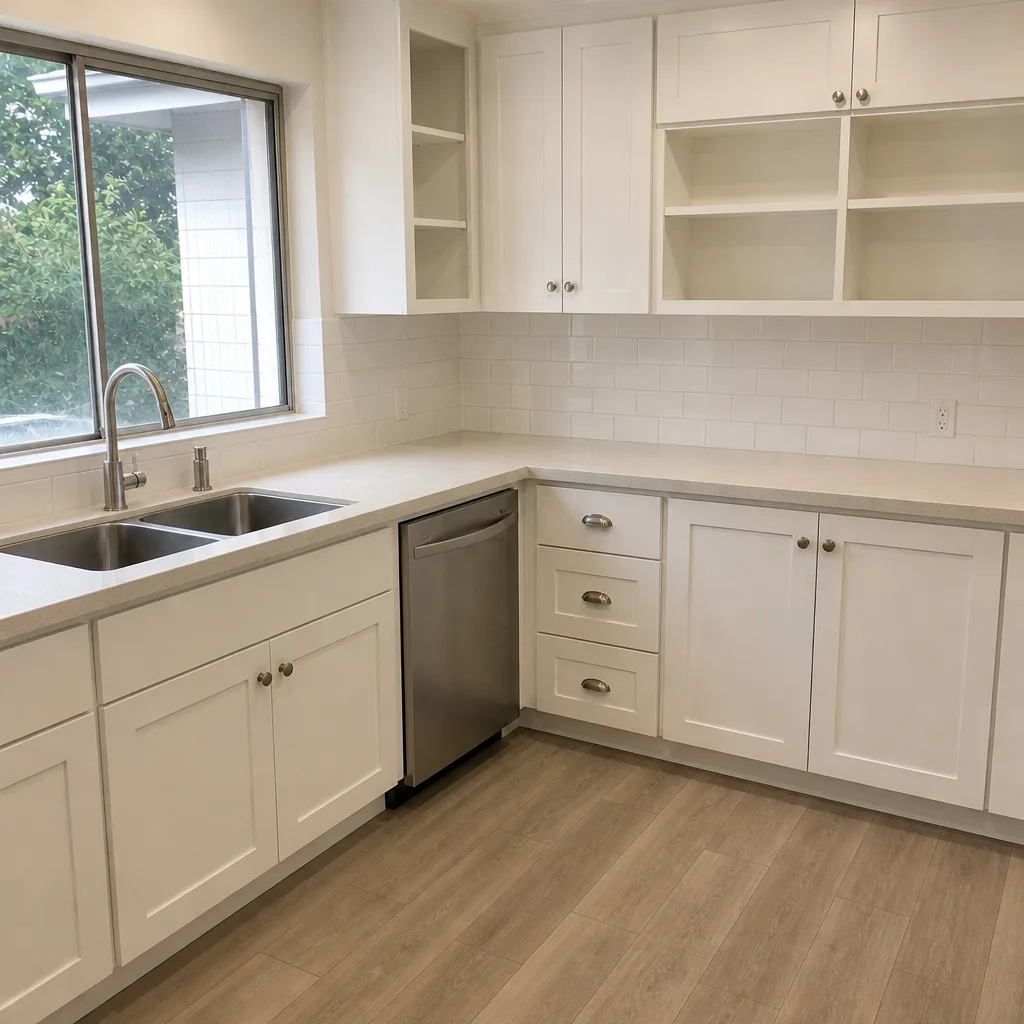 After
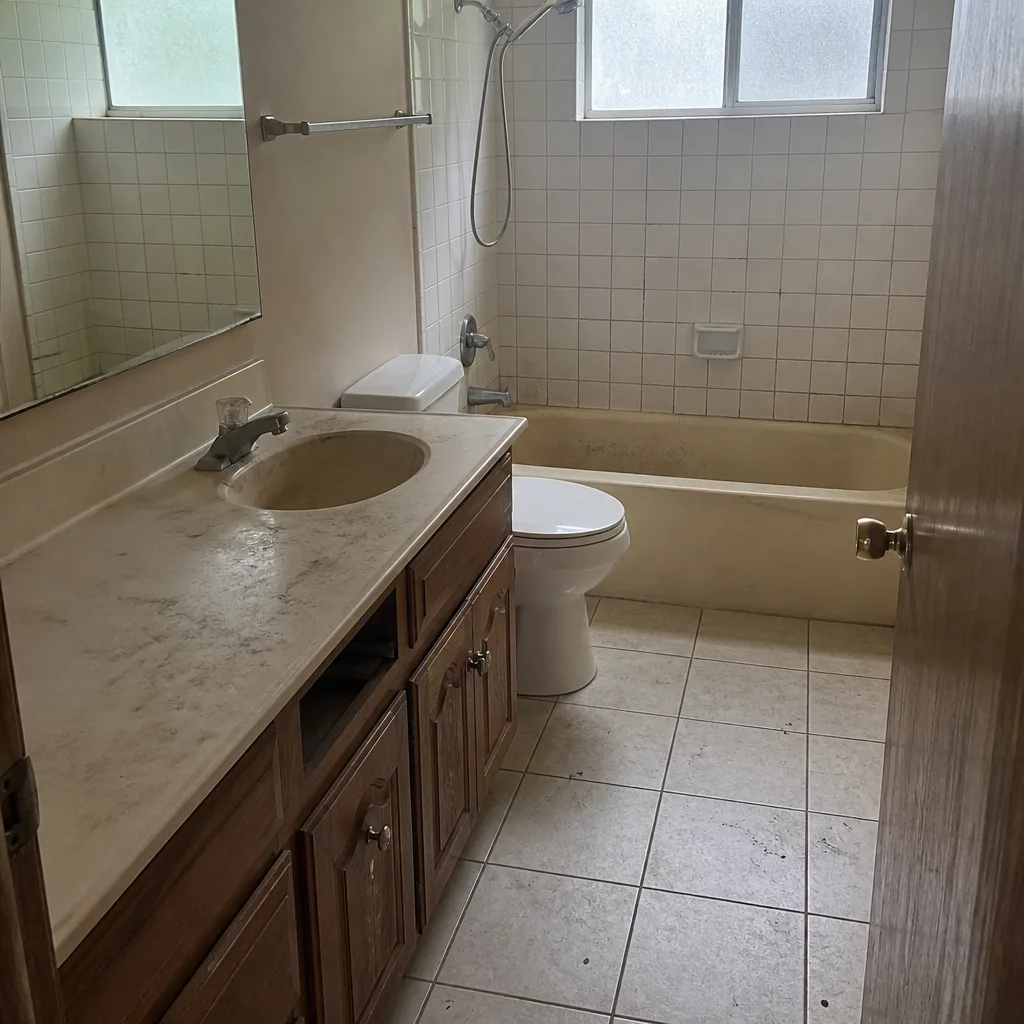 Before
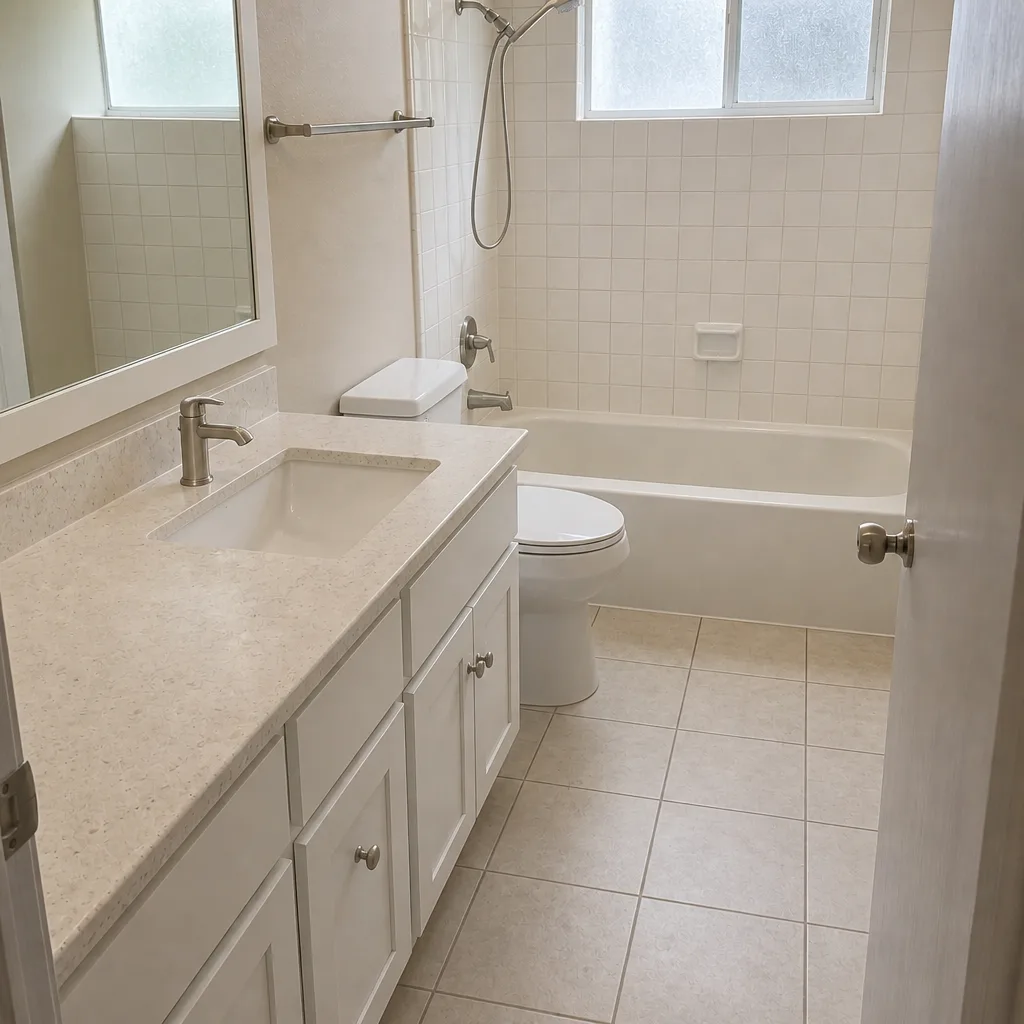 After
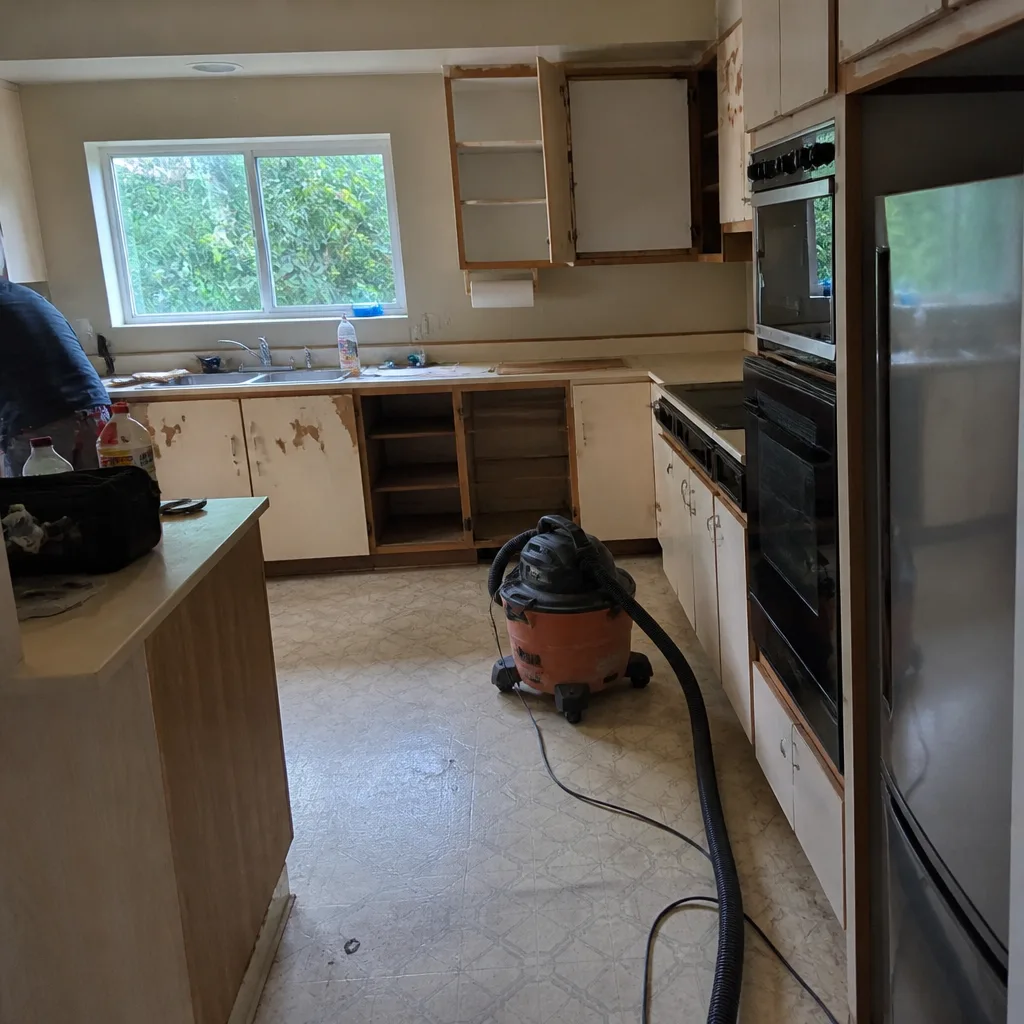 Before
 After